Gardening is as much about creativity as it is about nurturing plants. While many gardeners invest in chemical fertilizers and soil amendments, one of the most effective and sustainable tools is often found right in the kitchen: eggshells. Rich in calcium, trace minerals, and organic matter, eggshells can enhance soil health, prevent common plant diseases, and even deter pests. This article explores seven practical ways to use eggshells to strengthen your garden, complete with detailed guidance, benefits, and tips for optimal use.
Why Eggshells are Beneficial for Gardens
Eggshells are primarily composed of calcium carbonate (CaCO₃), which provides essential nutrients for plant growth. Calcium plays a crucial role in cell wall formation, preventing blossom-end rot in tomatoes, peppers, and other vegetables. In addition, eggshells contain small amounts of magnesium, potassium, and phosphorus, which contribute to overall soil fertility. Beyond nutrients, eggshells improve soil texture, enhance aeration, and support beneficial microorganisms.
1. Crushed Eggshells as Soil Amendment
How It Works:
Crushed eggshells add calcium directly to the soil, helping prevent nutrient deficiencies. Over time, they slowly release minerals, enriching the soil naturally.
Steps:
- Rinse eggshells to remove any egg residue.
- Allow them to dry completely.
- Crush into small pieces or grind into powder.
- Mix the crushed eggshells into garden beds or potting soil before planting.
Benefits:
- Prevents blossom-end rot in tomatoes, peppers, and eggplants.
- Improves soil structure and aeration.
- Gradual release of calcium supports long-term soil fertility.
Tips: Use finely crushed eggshells for faster decomposition, or coarser pieces for slow-release calcium.
2. Eggshells as Natural Pest Deterrents

How It Works:
Slugs, snails, and soft-bodied pests avoid crawling over sharp eggshells, making them an effective natural barrier.
Steps:
- Crush eggshells into jagged pieces.
- Scatter them around the base of vulnerable plants.
- Reapply after heavy rains to maintain effectiveness.
Benefits:
- Reduces the need for chemical pesticides.
- Creates a protective barrier without harming beneficial insects.
- Eco-friendly and safe for edible plants.
Tips: Combine eggshell barriers with mulch for improved protection and soil moisture retention.
3. Eggshell Tea Fertilizer

How It Works:
Eggshell tea is a liquid fertilizer made by steeping eggshells in water. This releases calcium and trace minerals that plants can readily absorb.
Steps:
- Rinse and crush eggshells.
- Boil in water for 10–15 minutes or soak overnight in cold water.
- Let the liquid cool.
- Pour the nutrient-rich tea around the base of plants.
Benefits:
- Provides a fast-acting calcium supplement.
- Enhances soil pH slightly, beneficial for acid-loving plants.
- Ideal for container gardens and raised beds.
Tips: Avoid using eggshell tea on seedlings immediately after transplanting; wait until they are established.
4. Composting Eggshells
How It Works:
Adding eggshells to compost boosts its calcium content, creating richer, more balanced compost for your garden.
Steps:
- Rinse eggshells to remove any egg residue.
- Crush them slightly before adding to your compost pile.
- Mix with greens (vegetable scraps) and browns (dry leaves, paper) for balanced decomposition.
Benefits:
- Improves overall compost nutrient profile.
- Speeds up decomposition by enhancing microbial activity.
- Produces a more fertile, structured soil amendment.
Tips: Avoid adding excessive eggshells; a handful per compost batch is sufficient for balanced nutrients.
5. Seed Starting with Eggshells

How It Works:
Eggshells can be used as small biodegradable seed-starting pots. They provide calcium as seedlings grow and can be planted directly into soil.
Steps:
- Carefully crack eggshells in half and rinse the interior.
- Fill with seed-starting soil.
- Plant seeds and water gently.
- When seedlings are ready, plant the eggshell directly into garden soil, crushing the shell slightly to allow roots to grow.
Benefits:
- Reduces the need for plastic seedling pots.
- Provides a natural calcium boost to young plants.
- Biodegradable and eco-friendly.
Tips: Ensure the shell has drainage holes by poking small holes at the bottom before planting.
6. Eggshell Mulch
How It Works:
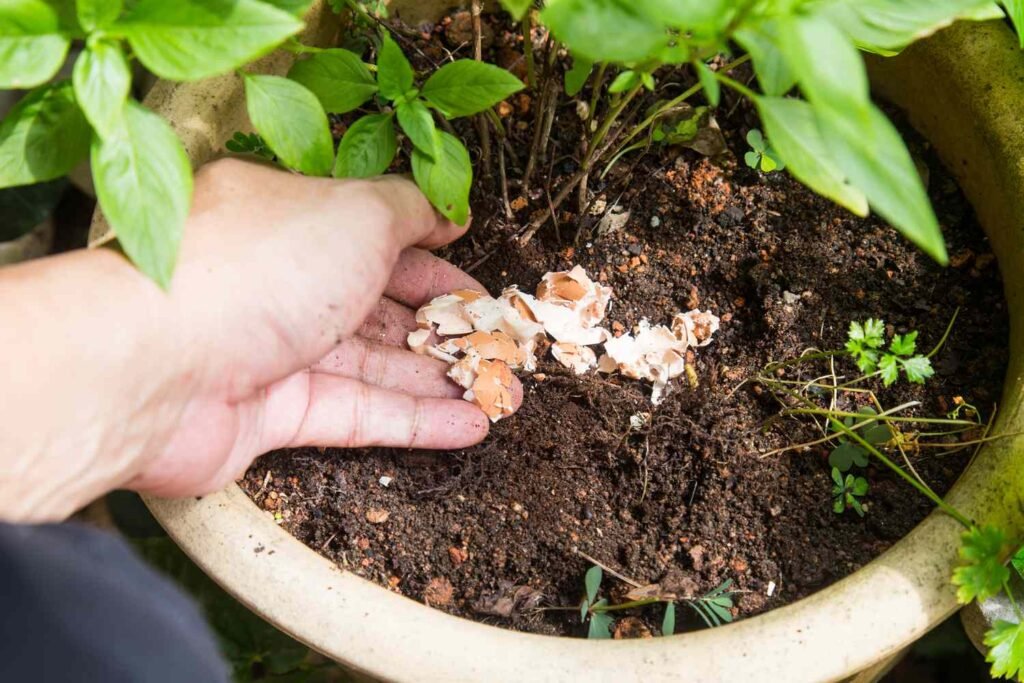
Eggshells can be used as mulch to conserve moisture, suppress weeds, and regulate soil temperature.
Steps:
- Crush eggshells coarsely.
- Spread a thin layer around plants.
- Replenish as needed to maintain coverage.
Benefits:
- Reduces soil evaporation and conserves water.
- Deters pests like slugs and snails.
- Gradually enriches the soil as shells decompose.
Tips: Combine eggshell mulch with organic mulch like straw or shredded leaves for enhanced benefits.
7. Eggshell Powder as Foliage Spray
How It Works:
Finely ground eggshell powder can be used as a foliar calcium supplement to strengthen leaves and prevent disease.
Steps:
- Crush eggshells into a fine powder using a mortar, grinder, or food processor.
- Mix 1–2 teaspoons of powder with water to create a slurry.
- Spray lightly on leaves and stems, avoiding flowers.
- Apply every 2–3 weeks for best results.
Benefits:
- Strengthens plant cell walls, reducing susceptibility to diseases.
- Supports healthy leaf development and growth.
- Provides calcium quickly through foliar absorption.
Tips: Test a small section first to ensure plants tolerate the spray; avoid overapplication to prevent residue buildup.
Best Practices for Using Eggshells in the Garden
- Clean Properly: Rinse eggshells to remove egg residue and prevent odors or pests.
- Dry Thoroughly: Dry eggshells before crushing or storing to prevent mold.
- Crush or Grind: Smaller pieces decompose faster and release nutrients more efficiently.
- Combine with Other Fertilizers: Eggshells provide calcium but not all nutrients. Supplement with compost, greens, or balanced fertilizers.
- Monitor Soil pH: Eggshells slightly raise pH, which is beneficial for many plants but should be considered for acid-loving species.
Advantages of Using Eggshells
- Cost-Effective: Reuses kitchen waste, reducing the need for purchased fertilizers.
- Environmentally Friendly: Minimizes landfill waste and promotes sustainable gardening.
- Safe for Edibles: Non-toxic, ideal for vegetables, herbs, and fruit plants.
- Improves Soil Health: Provides calcium, trace minerals, and improves soil structure.
- Pest Deterrent: Reduces damage from slugs, snails, and other soft-bodied pests.
Conclusion
Eggshells are a versatile, sustainable, and powerful tool for any gardener seeking to strengthen their garden naturally. Whether used as a soil amendment, pest deterrent, compost additive, seed starter, mulch, liquid fertilizer, or foliar spray, eggshells provide essential nutrients, improve soil structure, and promote healthy plant growth. By incorporating these seven practical methods into your gardening routine, you can enhance productivity, reduce reliance on chemical fertilizers, and transform kitchen waste into a valuable resource. Eggshells exemplify how small, everyday items can have a big impact on sustainable gardening, helping your plants thrive while supporting eco-friendly practices.