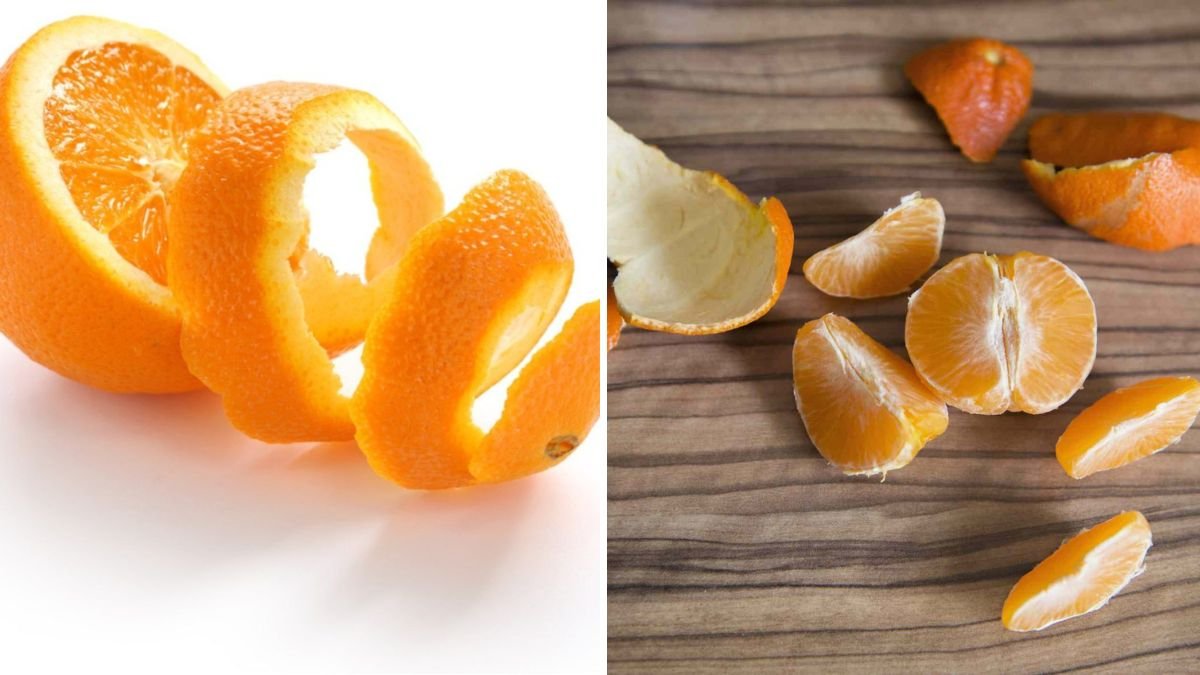
Citrus fruits—like oranges, lemons, limes, and grapefruits—are not only delicious and nutritious, but their peels can also be a gardener’s secret weapon. Instead of discarding them as waste, citrus peels can be transformed into versatile tools that improve soil, deter pests, attract beneficial insects, and even create natural fertilizers. Experts in sustainable gardening and horticulture emphasize the potential of citrus peels as eco-friendly and cost-effective resources. This guide explores eight practical ways to use citrus peels in your garden, providing detailed insights for maximizing their benefits.
1. Composting Citrus Peels for Nutrient-Rich Soil

Citrus peels are rich in nitrogen, phosphorus, potassium, and essential oils that enrich compost. When broken down properly, they contribute to nutrient-rich compost that supports healthy plant growth.
Expert tips:
- Chop citrus peels into small pieces to accelerate decomposition.
- Mix peels with brown materials (like dried leaves or cardboard) to balance carbon and nitrogen.
- Avoid adding excessive amounts at once, as citrus oils can temporarily slow microbial activity in compost.
Benefits:
- Adds organic matter and essential nutrients to the soil.
- Improves soil structure and water retention.
- Reduces waste and encourages sustainable gardening practices.
2. Creating Natural Fertilizer or Citrus Tea
Citrus peels can be used to make a natural fertilizer or “citrus tea” that feeds plants directly.
How to make citrus tea:
- Chop the peels into small pieces.
- Place them in a jar or bucket and cover with water.
- Let the mixture steep for 1–2 weeks.
- Strain and use the liquid to water plants.
Benefits:
- Provides a slow-release source of nutrients.
- Enhances soil acidity slightly, benefiting acid-loving plants like blueberries, tomatoes, and azaleas.
- Encourages stronger, healthier plant growth without synthetic fertilizers.
3. Mulching with Citrus Peels

Citrus peels can serve as a natural mulch, protecting soil, retaining moisture, and suppressing weeds.
Application tips:
- Chop peels into small pieces to prevent mold and attract pests.
- Spread a thin layer around the base of plants, avoiding direct contact with stems.
- Combine with other organic mulch materials like straw or wood chips for balance.
Benefits:
- Conserves soil moisture and moderates temperature fluctuations.
- Slowly decomposes, enriching the soil with nutrients.
- Repels some pests due to the strong citrus aroma.
4. Deterring Pests Naturally

Citrus peels contain essential oils like limonene, which act as natural repellents for certain insects, including ants, aphids, and cats.
Usage tips:
- Scatter chopped peels around garden beds or pathways.
- Crush or zest peels to release oils for stronger repellent effects.
- Reapply regularly, especially after rain, as the oils can wash away.
Expert insight: Citrus peels are effective in reducing pest activity without harmful chemicals, making them ideal for organic gardening.
5. Attracting Beneficial Insects
While citrus peels repel some pests, they can also attract helpful insects like pollinators and predatory bugs.
Tips:
- Place small pieces of peel near flowers or herb beds.
- Allow peels to slightly decompose, releasing sweet aromas that attract pollinators like bees and butterflies.
- Combine with flowering plants to create a micro-habitat for beneficial insects.
Benefits:
- Enhances pollination and fruit production.
- Supports natural pest control by encouraging predator insects.
- Promotes biodiversity in your garden ecosystem.
6. Using Citrus Peels to Prevent Soil-Borne Diseases
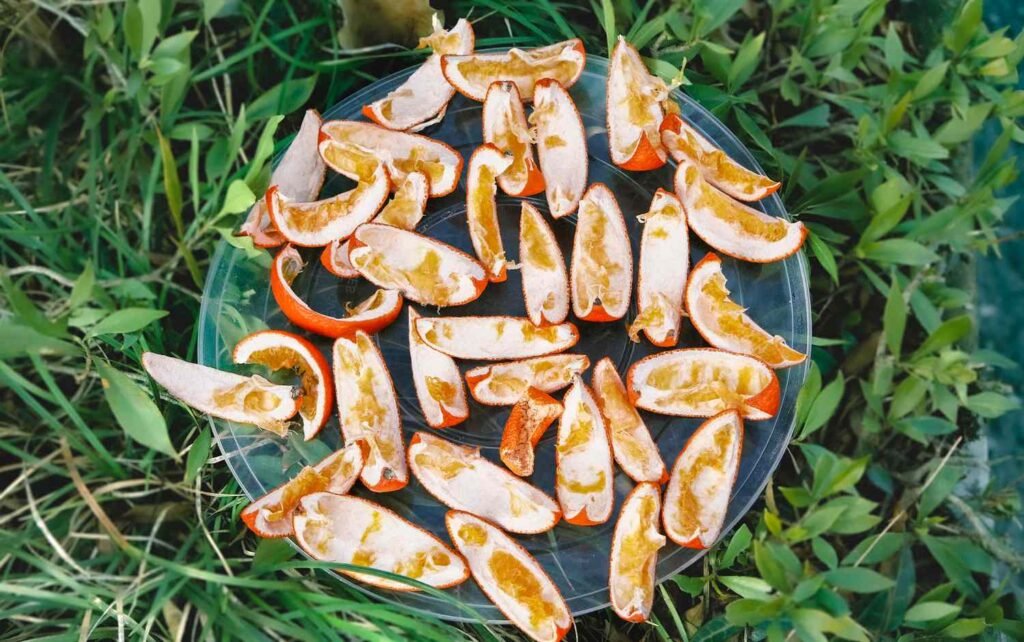
Some gardeners and experts report that citrus peels can reduce soil-borne fungal diseases due to their antifungal properties.
Application methods:
- Dry and grind peels into a powder, then sprinkle lightly over garden soil.
- Incorporate small amounts into potting mixes for container plants.
- Combine with compost or mulch for slow-release antifungal effects.
Benefits:
- Reduces risk of root rot and other fungal infections.
- Creates a healthier growing environment for vegetables and ornamentals.
- Supports natural, chemical-free disease management.
7. Enhancing Soil Acidity for Acid-Loving Plants
Citrus peels are slightly acidic and can help improve conditions for acid-loving plants like blueberries, azaleas, camellias, and gardenias.
Usage tips:
- Chop and mix peels into soil around acid-loving plants.
- Combine with pine needles, coffee grounds, or peat moss for stronger acidity.
- Avoid overuse, as excessive acidity can harm neutral or alkaline-loving plants.
Benefits:
- Encourages optimal nutrient uptake for acid-loving species.
- Promotes healthy leaf growth and vibrant flowers.
- Provides a sustainable alternative to commercial soil acidifiers.
8. Making Homemade Pest Traps and Repellents
Citrus peels can be creatively used in DIY pest control methods.
Examples:
- Fruit fly trap: Place peels in a jar with a small amount of vinegar to attract and trap fruit flies.
- Slug deterrent: Lay peels around plants to deter slugs and snails.
- Cat repellent: Scatter peels around garden beds to prevent cats from digging in soil.
Expert tips:
- Combine peels with other natural deterrents like coffee grounds or garlic for increased effectiveness.
- Replace peels regularly to maintain strong aromas and continued pest control.
Additional Expert Insights
- Balance is key: While citrus peels provide many benefits, excessive use can temporarily disrupt composting or soil microbial activity. Use in moderation and combine with other organic matter.
- Chop or shred peels: Smaller pieces decompose faster, releasing nutrients more effectively and minimizing mold growth.
- Avoid chemical residues: Use peels from organic or pesticide-free citrus whenever possible to prevent introducing harmful chemicals into your garden.
- Storage: Dry extra peels to store for year-round gardening applications.
Conclusion
Citrus peels are far more than kitchen waste—they are versatile tools that can enhance soil, repel pests, attract beneficial insects, and support plant health. By incorporating citrus peels into compost, mulch, fertilizers, and DIY pest control strategies, gardeners can harness the natural power of citrus for a thriving, eco-friendly garden. Experts emphasize that careful application, combined with other organic practices, maximizes benefits while maintaining a balanced garden ecosystem.
Whether you are a beginner or an experienced gardener, using citrus peels in your garden is a sustainable, cost-effective, and creative way to improve plant growth, protect crops, and enjoy a more vibrant and productive garden. From natural fertilizers to eco-friendly pest repellents, the humble citrus peel proves that sometimes the simplest gardening solutions are also the most effective.