Indoor plants are a wonderful way to bring life, color, and freshness to your home or office. However, even the healthiest-looking plants can struggle if they are kept in the wrong-sized pot for too long. Repotting is an essential part of indoor plant care, allowing roots more space, replenishing soil nutrients, and encouraging growth. Ignoring the signs that your plant needs repotting can lead to stunted growth, poor health, or even plant death.
In this guide, we will explore six key signs that your indoor plants need repotting immediately, along with detailed tips on how to repot effectively and maintain plant health.
1. Roots Are Growing Out of the Drainage Holes
Why This Happens
When roots fill a pot and start escaping through drainage holes, it’s a clear sign that the plant has outgrown its current container. This “root-bound” condition limits the plant’s ability to absorb water and nutrients, causing stress and poor growth.
What to Do
- Carefully remove the plant from its pot.
- Gently untangle or prune circling roots.
- Choose a new pot 1–2 sizes larger than the current one with drainage holes.
- Add fresh potting soil suitable for your plant type.
Pro Tip: If roots are densely packed, lightly loosen them before repotting to encourage outward growth in the new pot.
2. Water Drains Too Quickly or Pools on the Surface
Why This Happens
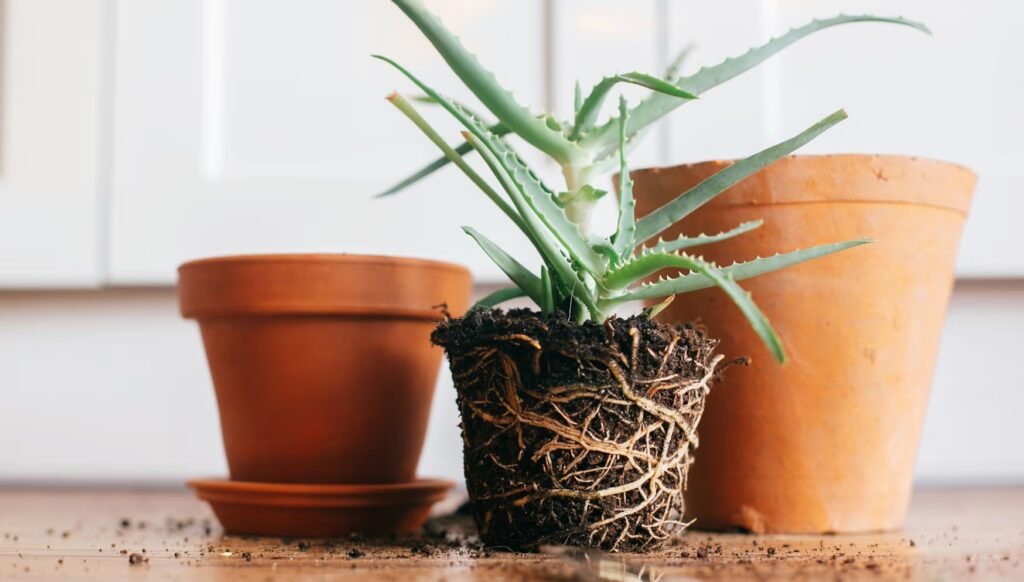
If water flows through the pot immediately after watering or sits on the soil surface without being absorbed, it indicates that the plant’s roots either dominate the pot or the soil has degraded. Old soil becomes compacted and loses its ability to retain moisture, which can stress your plant.
What to Do
- Repot the plant using fresh, well-draining soil.
- Ensure the new pot has adequate drainage holes.
- For water-sensitive plants, consider a soil mix with added perlite or sand to improve aeration.
Pro Tip: Repotting improves both water absorption and aeration, helping the plant thrive.
3. Plant Growth Has Stalled
Why This Happens
If your plant has stopped growing or produces smaller leaves than usual, it may be root-bound or nutrient-depleted. Plants need space and fresh soil nutrients to continue growing.
What to Do
- Check the roots for overcrowding.
- Prune any dead or excessively long roots.
- Transfer to a larger pot with fresh potting soil enriched with nutrients.
- Resume a proper fertilization schedule to encourage new growth.
Pro Tip: Regular repotting every 1–2 years ensures your indoor plants continue to flourish and grow robustly.
4. Yellowing or Dropping Leaves
Why This Happens
Yellowing leaves are often a sign of stress, which can be caused by root crowding, poor soil quality, or lack of nutrients. If your plant is otherwise healthy but the lower leaves are turning yellow and falling off, repotting may be the solution.
What to Do
- Inspect the root system; prune any dead or unhealthy roots.
- Repot in fresh soil with appropriate nutrients.
- Water carefully after repotting to avoid additional stress.
Pro Tip: Yellowing leaves may also indicate overwatering. Repotting into fresh, well-draining soil can resolve both water retention and nutrient issues.
5. Roots Are Visible on the Soil Surface
Why This Happens
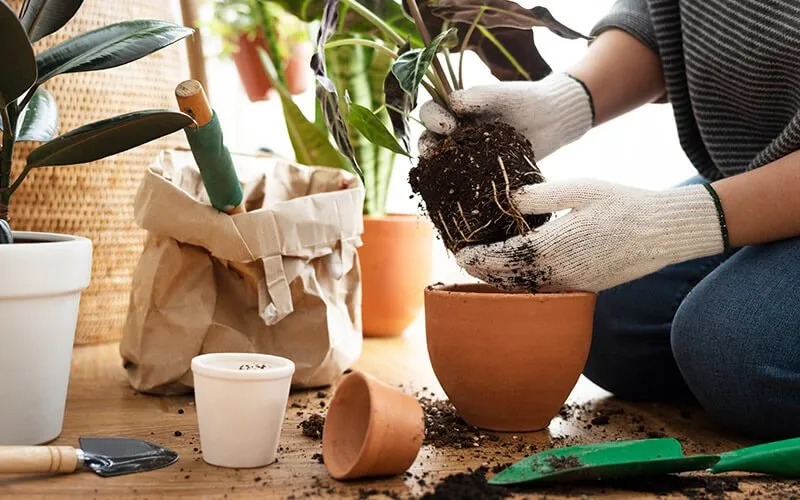
When roots grow across the soil surface, it indicates that the plant has used up the available space in the pot. This can hinder proper soil aeration and moisture distribution.
What to Do
- Gently lift the plant out of the pot.
- Prune exposed roots carefully.
- Repot in a slightly larger container with fresh potting soil to provide adequate space for roots to grow downward.
Pro Tip: Covering visible roots with a thin layer of soil or moss during repotting helps protect them and promotes healthier growth.
6. The Plant Is Top-Heavy or Tipping Over
Why This Happens
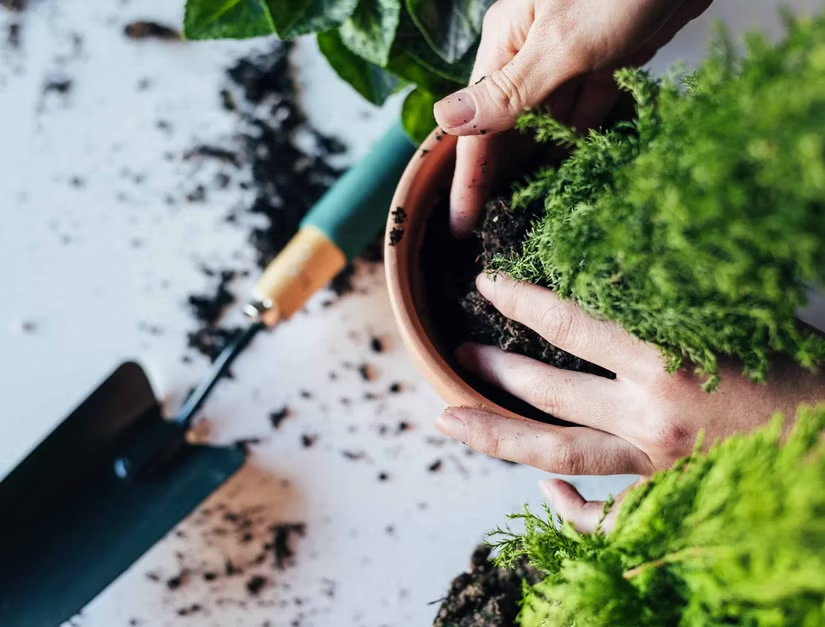
If your indoor plant becomes top-heavy, leans to one side, or tips over easily, it often means that the roots cannot support the plant’s weight. This is common in tall plants or those in small pots. Repotting stabilizes the plant and allows the root system to expand.
What to Do
- Select a wider, heavier pot to provide stability.
- Gently prune overly long roots if needed.
- Add fresh soil to anchor the plant firmly.
- Consider staking the plant until the roots reestablish themselves in the new pot.
Pro Tip: Using a pot that is wider than it is tall can prevent tipping in tall or top-heavy plants.
How to Repot Indoor Plants Successfully
- Choose the Right Pot
- Slightly larger than the current pot (1–2 sizes).
- Must have drainage holes to prevent root rot.
- Use Fresh Potting Mix
- Select soil appropriate for your plant type (cactus mix for succulents, general indoor mix for foliage plants).
- Avoid compacted or old soil that prevents root aeration.
- Handle Roots Carefully
- Gently loosen root-bound roots.
- Trim damaged or dead roots to encourage new growth.
- Plant and Water Properly
- Position the plant at the same soil depth as before.
- Add fresh soil around roots, gently pressing to remove air pockets.
- Water lightly immediately after repotting; resume normal care after a week.
- Post-Repot Care
- Place in indirect light for a few days to reduce transplant shock.
- Avoid fertilizing immediately; let the plant adjust to new soil.
Pro Tip: Repotting during the plant’s active growing season (spring or early summer) increases success and recovery.
Benefits of Regular Repotting
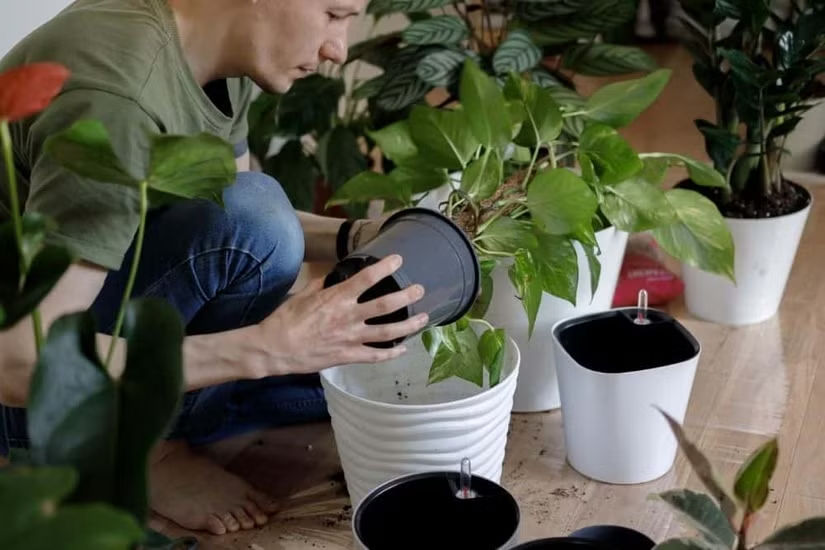
- Improves root health: Frees crowded roots, allowing for better nutrient uptake.
- Boosts growth: Fresh soil and extra space encourage larger leaves and stronger stems.
- Prevents diseases: Old soil can harbor pests, mold, and fungi.
- Enhances stability: Larger pots provide better support for tall or top-heavy plants.
Pro Tip: Keeping a schedule for checking and repotting plants helps maintain long-term health.
Common Mistakes to Avoid
- Using a pot that’s too large: Can retain excess water and cause root rot.
- Repotting too frequently: Stresses the plant unnecessarily.
- Neglecting drainage: Always ensure the pot allows water to escape.
- Ignoring plant-specific soil needs: Cactus, ferns, and tropical plants have different soil requirements.
Pro Tip: Match pot and soil type to the plant species for optimal results.
Final Thoughts
Repotting is essential for maintaining healthy, thriving indoor plants. Recognizing the six key signs—roots outgrowing drainage holes, poor water absorption, stalled growth, yellowing or dropping leaves, visible roots on soil surface, and top-heavy plants—can prevent plant stress and ensure long-term vitality.
Key takeaways:
- Regularly monitor your plants for signs of distress.
- Repot during the growing season for faster recovery.
- Use appropriately sized pots and fresh soil to support healthy roots.
- Handle roots carefully, water correctly, and provide suitable light post-repotting.
By following these guidelines, your indoor plants will not only survive but flourish, enhancing your indoor environment with vibrant foliage and healthy growth. Repotting is not just a maintenance task—it’s a key step in ensuring your indoor garden thrives for years to come.