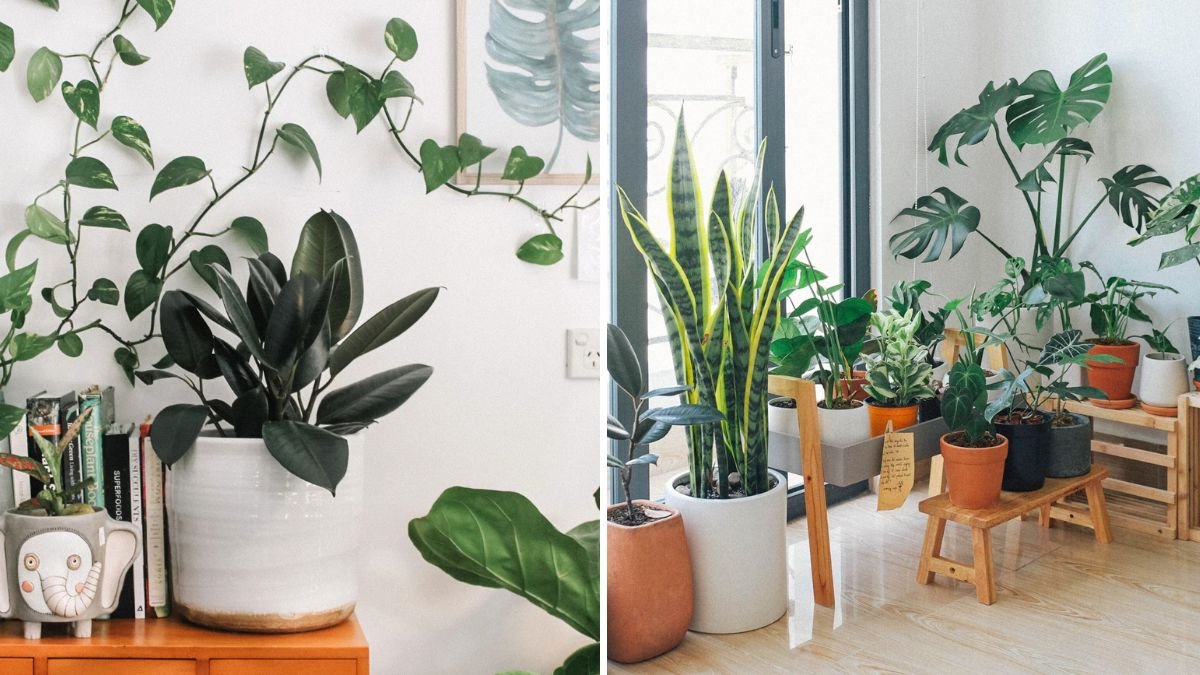
Not every indoor space is flooded with sunlight. Many homes and offices have corners, bathrooms, or rooms with north-facing windows where bright, direct light is limited. While some houseplants struggle in low-light conditions, several species thrive in shade or indirect light, making them perfect for dimmer areas.
In this guide, we explore five shade-loving houseplants that can survive—and even flourish—without direct sunlight. We’ll cover care tips, watering routines, ideal locations, and how to incorporate them into your home for a healthy, vibrant indoor garden.
1. Snake Plant (Sansevieria trifasciata)
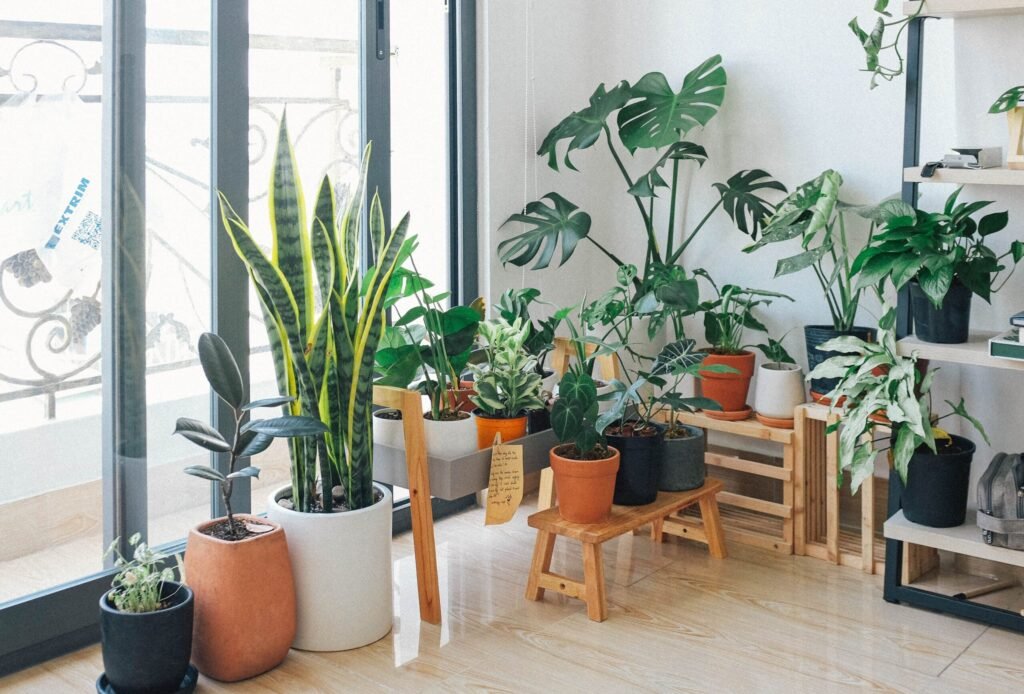
Why It Thrives in Shade
Snake plants are famous for their resilience and adaptability. They can survive low-light conditions, tolerate infrequent watering, and purify indoor air, making them perfect for shaded corners.
Care Tips
- Light: Low to bright indirect light; avoid prolonged direct sunlight.
- Watering: Allow the soil to dry completely between waterings. Water sparingly in winter.
- Soil: Well-draining cactus or succulent mix.
- Temperature: 60–85°F (16–29°C).
Styling Tips
- Place a snake plant in bedrooms, offices, or hallways where light is limited.
- Use tall, decorative pots to accentuate the plant’s upright leaves.
- Combine with other low-light plants for a modern, minimalistic indoor garden.
Pro Tip: Snake plants release oxygen at night, making them ideal for bedrooms.
2. ZZ Plant (Zamioculcas zamiifolia)
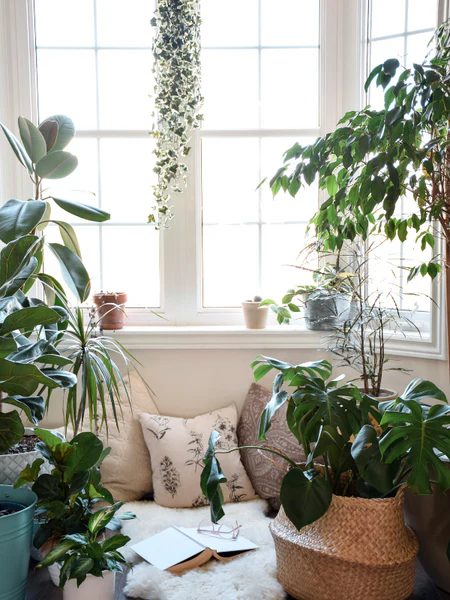
Why It Thrives in Shade
ZZ plants are among the most low-maintenance shade-loving plants. Their waxy, dark green leaves store water, allowing them to survive neglect and dimly lit rooms.
Care Tips
- Light: Low to bright indirect light; no direct sunlight.
- Watering: Water every 2–3 weeks; allow soil to dry between waterings.
- Soil: Well-draining potting mix with sand or perlite.
- Temperature: 65–75°F (18–24°C).
Styling Tips
- ZZ plants look stunning as floor plants or on low shelves.
- Their shiny foliage pairs beautifully with modern interiors or minimalist decor.
- Can be propagated via leaf cuttings or division for multiple placements.
Pro Tip: ZZ plants are toxic if ingested, so place them away from pets and small children.
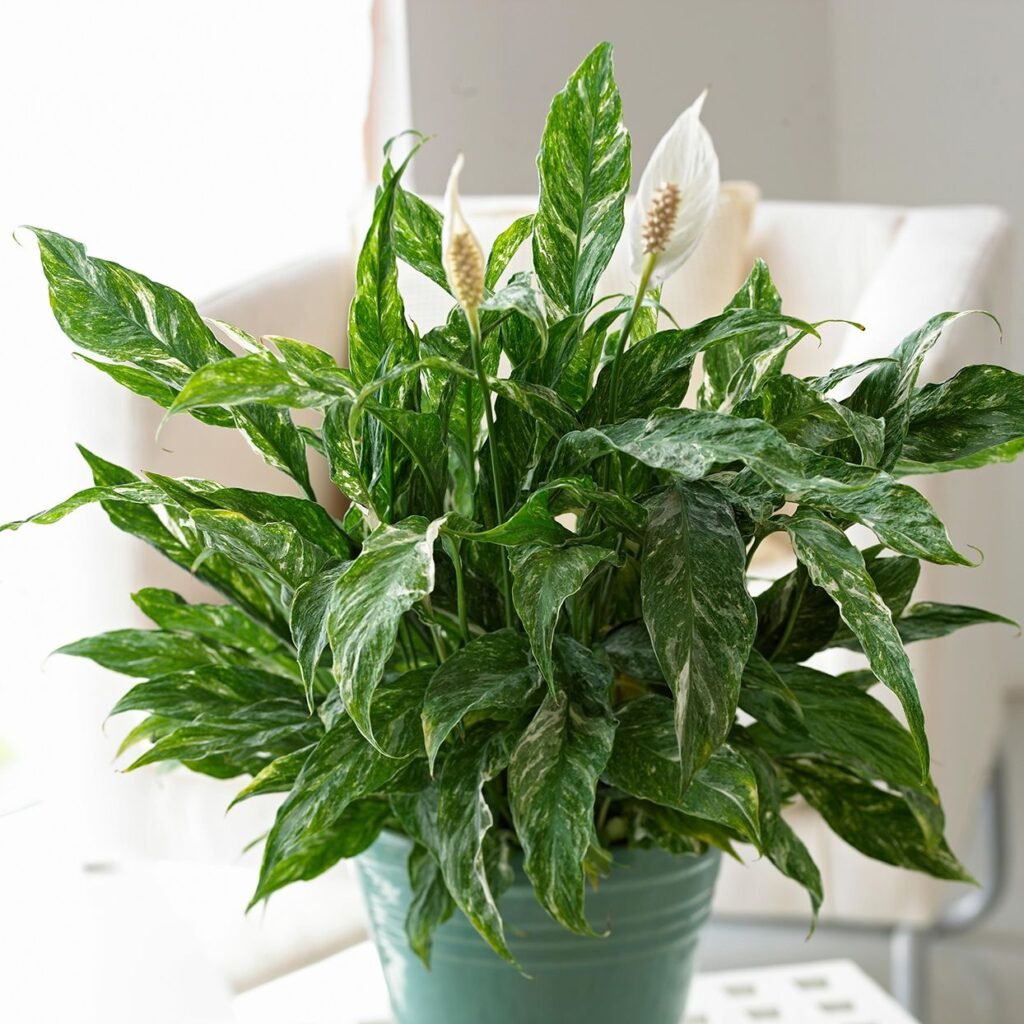
3. Peace Lily (Spathiphyllum spp.)
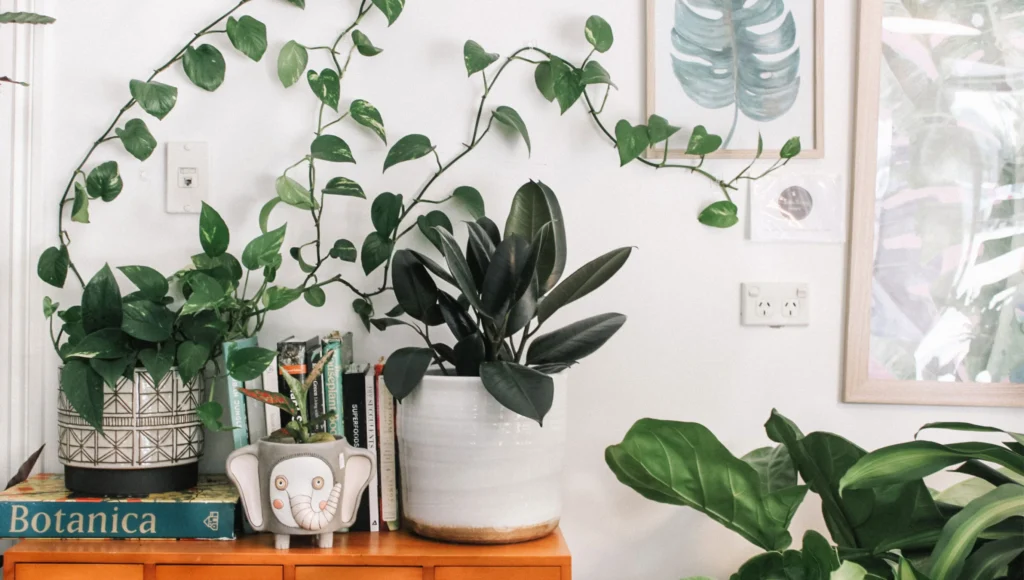
Why It Thrives in Shade
Peace lilies are classic low-light plants that thrive in shaded indoor areas. They are also known for their air-purifying abilities and elegant white blooms.
Care Tips
- Light: Low to moderate indirect light; avoid direct sun which can scorch leaves.
- Watering: Keep soil consistently moist but not waterlogged.
- Humidity: Enjoys higher humidity, making bathrooms an ideal spot.
- Temperature: 65–80°F (18–27°C).
Styling Tips
- Peace lilies are perfect as tabletop plants, floor plants, or in decorative pots.
- Pair with darker interiors to highlight their white blooms and glossy foliage.
- Fertilize monthly during the growing season with a balanced liquid fertilizer.
Pro Tip: Drooping leaves indicate the plant needs water, but it recovers quickly once watered.
4. Pothos (Epipremnum aureum)
Why It Thrives in Shade
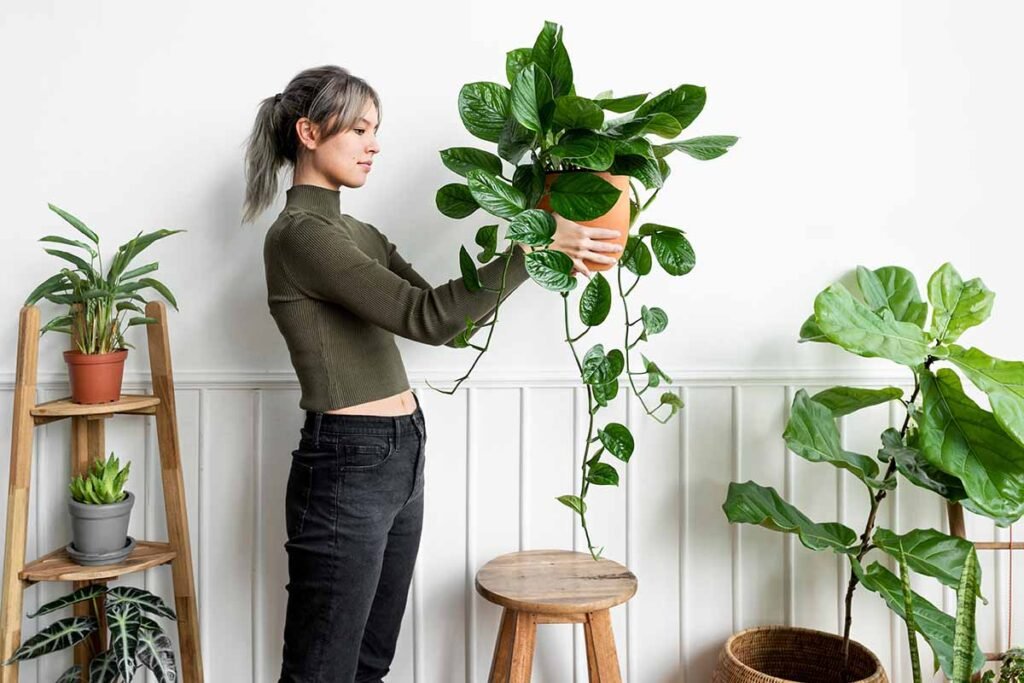
Pothos, also known as Devil’s Ivy, is a vining plant that tolerates low-light conditions exceptionally well. It’s ideal for hanging baskets, shelves, or as a cascading plant in shaded corners.
Care Tips
- Light: Low to bright indirect light; avoids direct sunlight to prevent leaf burn.
- Watering: Water when the top inch of soil is dry.
- Soil: Well-draining potting mix.
- Temperature: 60–85°F (16–29°C).
Styling Tips
- Train vines along a trellis, bookshelf, or hanging basket.
- Combine different leaf varieties (e.g., golden pothos, marble queen) for visual interest.
- Can be grown in water as an alternative to soil for easy propagation.
Pro Tip: Pothos can survive in extremely low light but will grow faster with some indirect sunlight.
5. Cast Iron Plant (Aspidistra elatior)
Why It Thrives in Shade
True to its name, the cast iron plant is virtually indestructible, tolerating deep shade, irregular watering, and neglect. It’s a slow-growing plant with lush, dark green leaves, perfect for low-light indoor corners.
Care Tips
- Light: Tolerates deep shade; avoid direct sunlight which can scorch leaves.
- Watering: Water when the top 2 inches of soil are dry.
- Soil: Rich, well-draining potting mix.
- Temperature: 50–75°F (10–24°C).
Styling Tips
- Ideal for floor placement or low-light hallways.
- Can be combined with ferns or snake plants to create a lush indoor foliage corner.
- Minimal pruning needed; simply remove yellowing leaves as they appear.
Pro Tip: Cast iron plants are slow growers, so patience is key.
Tips for Thriving Shade-Loving Houseplants
- Proper Watering: Low-light plants grow slower and need less water than sun-loving plants. Always check soil moisture before watering.
- Avoid Overfertilizing: Shade-loving plants require fewer nutrients; fertilize lightly during the growing season.
- Rotate Plants: Even shade plants benefit from occasional rotation to ensure uniform growth.
- Dust Leaves: Clean leaves regularly to allow photosynthesis and maintain healthy foliage.
- Monitor for Pests: Shade-loving plants can attract pests like spider mites or aphids; check regularly.
Pro Tip: Grouping shade-tolerant plants together can create a microclimate that maintains humidity and promotes growth.
Creating a Stress-Free Green Corner
- Placement: Ideal in bedrooms, offices, bathrooms, or dark corners.
- Design: Mix different heights and textures for visual interest. Combine upright plants like snake plants with trailing ones like pothos.
- Decor: Use decorative pots, baskets, or stands to elevate the aesthetic.
- Mindfulness: A shaded indoor garden promotes calm, reduces stress, and enhances focus.
Pro Tip: Even in minimal light, these plants improve air quality, creating a healthier indoor environment.
Final Thoughts
Shade-loving houseplants are a perfect solution for dim indoor spaces, allowing you to enjoy greenery without worrying about sunlight exposure. Snake plants, ZZ plants, peace lilies, pothos, and cast iron plants are hardy, low-maintenance, and visually appealing.
Key takeaways:
- Choose plants suited for low-light conditions.
- Water sparingly and avoid overfertilization.
- Rotate and clean leaves for optimal growth.
- Combine plants creatively to design a calming indoor garden.
With these five shade-loving houseplants, you can transform even the darkest corners of your home into a vibrant, stress-free green sanctuary, improving both aesthetics and indoor air quality.