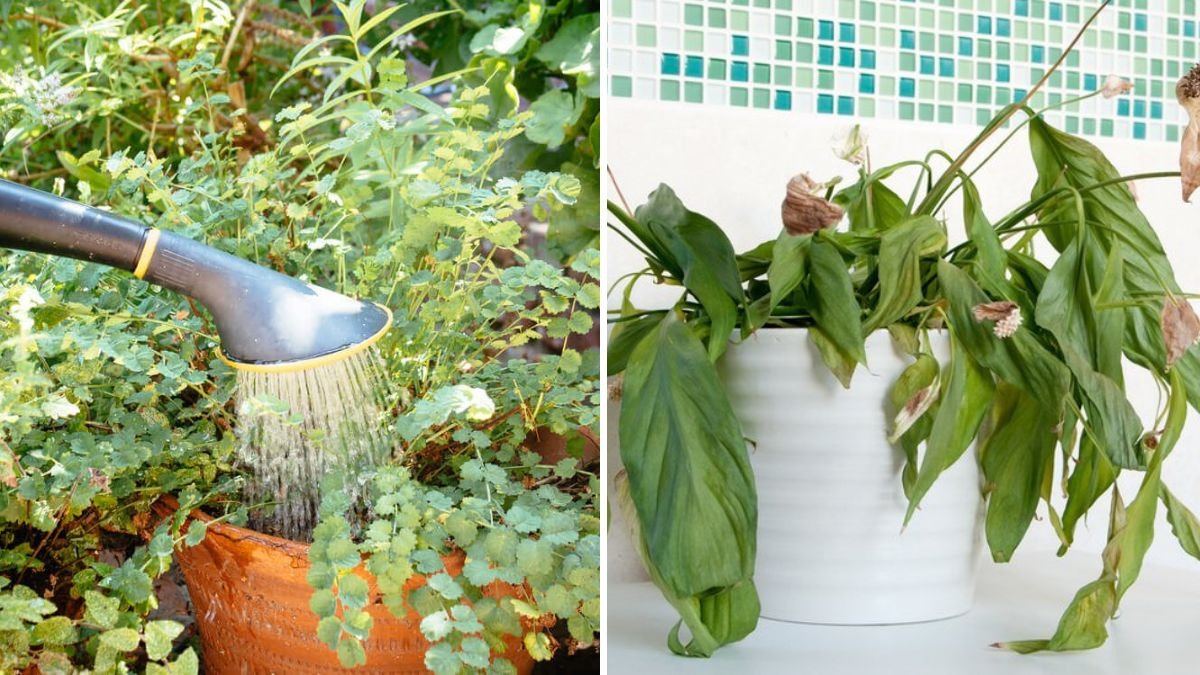
Heat waves can pose a serious challenge for gardeners, especially for potted plants, which are more exposed to temperature fluctuations than in-ground plants. Pots tend to heat up quickly, dry out faster, and can stress the roots, leading to wilting, scorched leaves, or even plant death. However, with the right strategies, you can keep your potted plants thriving even during extreme summer heat.
This guide provides practical tips and detailed strategies to protect your container plants, maintain soil moisture, prevent sun damage, and ensure healthy growth during heat waves.
1. Choose Heat-Tolerant Plants
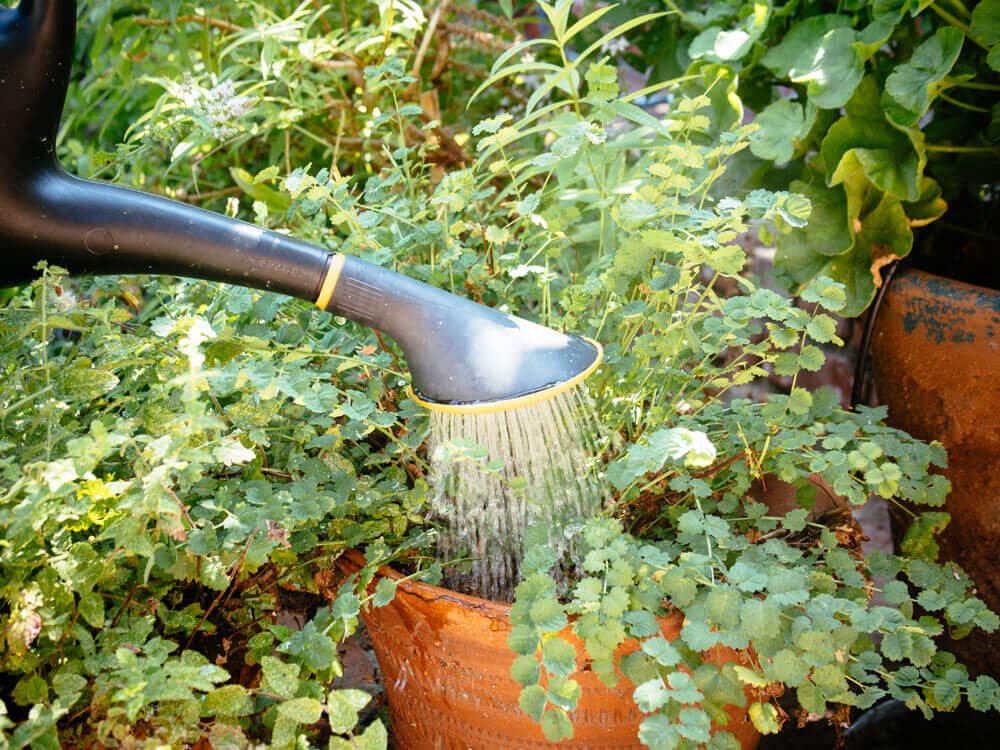
Selecting plants that naturally tolerate high temperatures is the first step in ensuring your container garden survives a heat wave.
Popular Heat-Tolerant Potted Plants:
- Succulents: Aloe, Sedum, Echeveria
- Herbs: Rosemary, Thyme, Oregano, Sage
- Flowering Plants: Lantana, Bougainvillea, Marigolds
- Vegetables: Peppers, Eggplants, Okra
Benefits:
- Reduces stress on plants during extreme temperatures.
- Minimizes water requirements while maintaining vibrant growth.
- Increases the likelihood of blooms and harvests even in hot conditions.
Tip: Group heat-tolerant plants in sunny spots and place more delicate species in shaded areas or indoors during peak heat.
2. Provide Adequate Shade
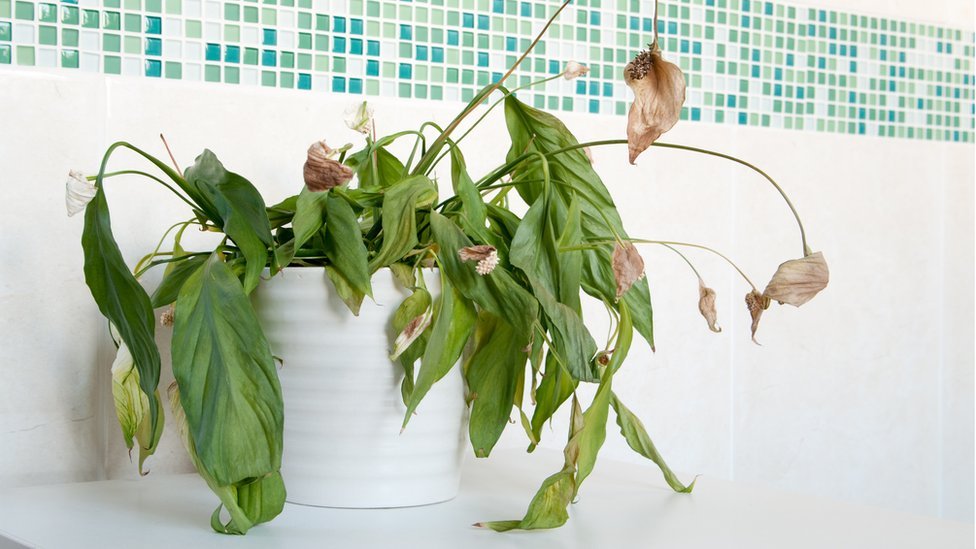
Excessive sun exposure during heat waves can scorch leaves, fade flowers, and dry out soil rapidly. Providing temporary shade helps protect potted plants.
Shading Options:
- Moveable shade screens or cloths: Use garden fabric or lightweight sheets to create shade during the hottest hours.
- Positioning: Move containers to patios, under trees, or along walls that provide afternoon shade.
- Temporary umbrellas or trellises: For larger containers or groupings, set up umbrellas or trellises with climbing plants to create shade.
Benefits:
- Reduces leaf scorch and heat stress.
- Prevents rapid soil evaporation.
- Supports consistent growth and flowering.
Tip: Morning sun is less intense; allow plants to receive light early in the day and provide protection in the afternoon.
3. Use Appropriate Containers
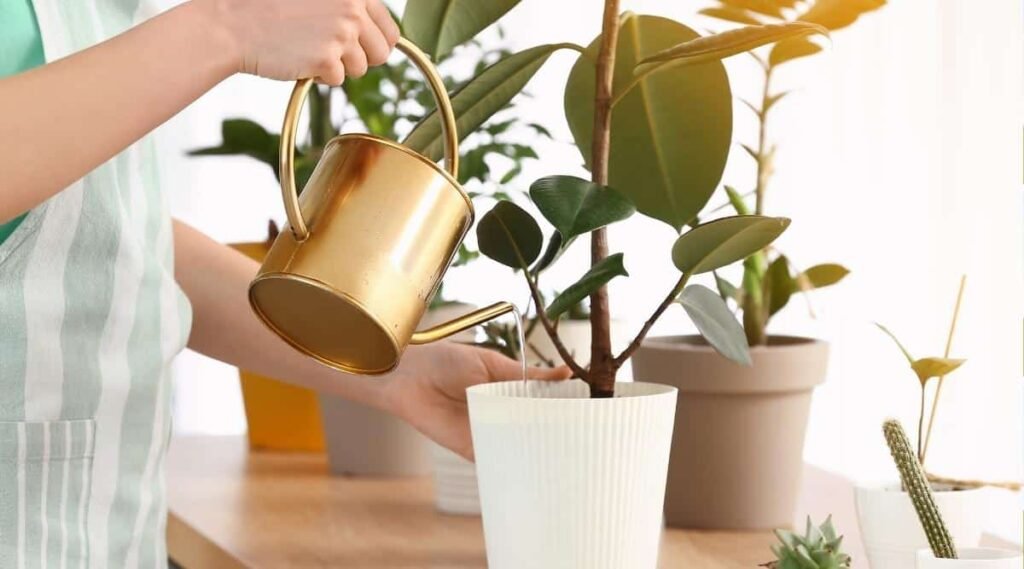
Container material and size play a crucial role in protecting plants from heat:
Container Types:
- Terracotta pots: Porous, allow soil to breathe but dry quickly. Use for drought-tolerant plants.
- Plastic pots: Retain moisture better, ideal for plants needing consistent hydration.
- Ceramic pots: Heavy and insulating, protect roots from rapid temperature fluctuations.
Container Size:
- Larger pots: Hold more soil, providing greater insulation for roots.
- Smaller pots: Heat up faster and dry out quickly; monitor water more closely.
Benefits:
- Keeps roots cooler during heat waves.
- Reduces frequency of watering required.
- Provides stable growing conditions for stressed plants.
Tip: Consider double-potting smaller containers by placing a smaller pot inside a larger one with a layer of sand or mulch between them for insulation.
4. Optimize Watering Practices
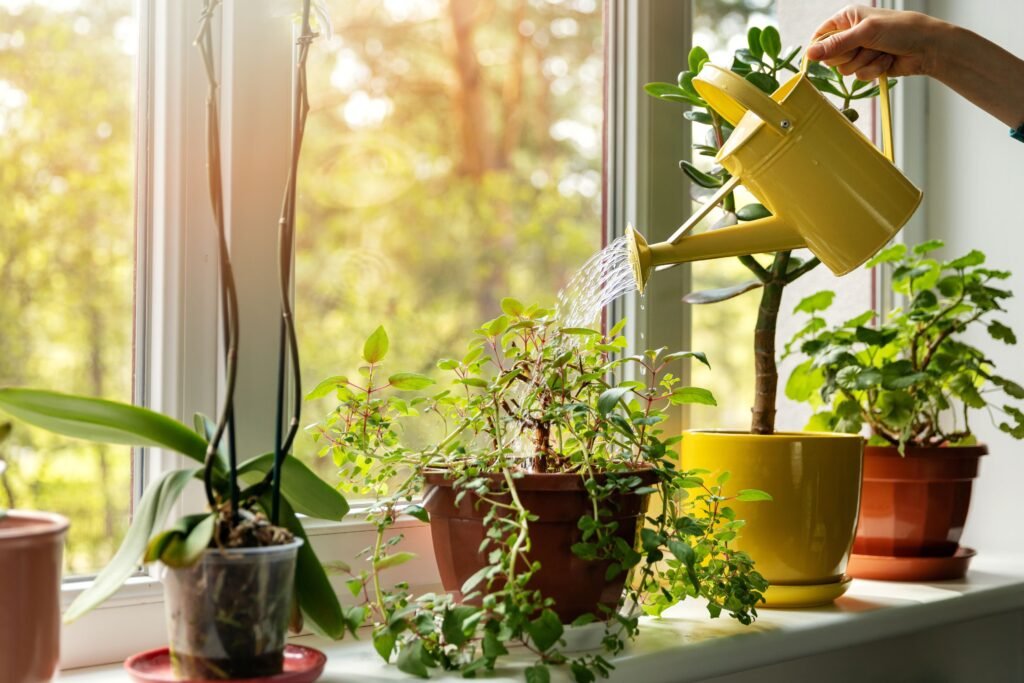
Watering is the most crucial step for keeping potted plants alive during heat waves. Container plants require more frequent and careful watering than in-ground plants.
Watering Strategies:
- Deep watering: Water thoroughly so the soil absorbs moisture to the roots.
- Frequency: Water early in the morning or late in the evening to reduce evaporation.
- Check soil moisture: Use a finger or moisture meter to ensure soil is damp, not soggy.
- Mulch: Apply organic mulch, such as straw, bark, or shredded leaves, to retain soil moisture and reduce evaporation.
Benefits:
- Maintains plant hydration during extreme heat.
- Prevents leaf wilting and sunburn.
- Encourages deep root growth for greater heat resilience.
Tip: Avoid watering during midday sun, as water droplets can act as magnifying glasses, scorching leaves.
5. Improve Soil Quality
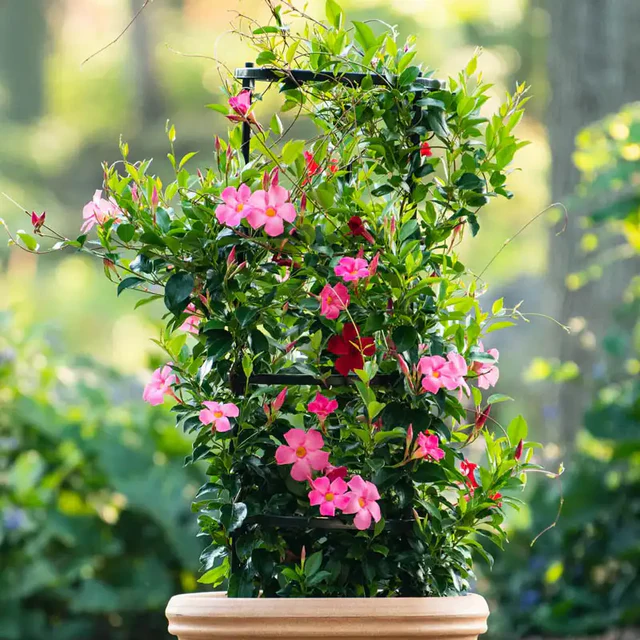
The right soil mix is essential for heat resilience in potted plants.
Soil Recommendations:
- Use well-draining potting mixes to prevent waterlogging.
- Incorporate water-retaining additives like coconut coir, vermiculite, or peat moss to keep moisture available for longer periods.
- Fertilize lightly; avoid high nitrogen fertilizers during heat waves as they promote tender, heat-sensitive growth.
Benefits:
- Balances moisture retention with drainage.
- Protects roots from extreme temperature fluctuations.
- Promotes healthy, stress-resistant growth.
Tip: Avoid garden soil in containers as it compacts easily and drains poorly, increasing heat stress risk.
6. Group Containers for Microclimate Benefits
Strategically grouping potted plants can create a cooler microenvironment:
- Place taller plants or trellised vines to shade shorter or more sensitive plants.
- Grouping pots reduces wind exposure, preventing rapid soil drying.
- Placing containers together increases humidity around plants, reducing heat stress.
Benefits:
- Keeps soil cooler and slows water loss.
- Protects delicate foliage from direct sun exposure.
- Helps maintain a more stable growing environment during heat waves.
Tip: Avoid overcrowding; ensure air circulation to prevent fungal growth.
7. Prune and Deadhead
Removing excess foliage and spent blooms helps plants conserve energy and maintain vigor during stressful heat conditions.
Pruning Tips:
- Trim dead or yellowing leaves to reduce water loss.
- Pinch back flowers to encourage more blooms without overtaxing the plant.
- Avoid heavy pruning during extreme heat, as it can stress the plant further.
Benefits:
- Directs energy toward healthy growth and flowering.
- Reduces transpiration load during hot periods.
- Improves air circulation around the plant.
Tip: Perform light pruning in the morning or evening when temperatures are lower.
8. Use Anti-Heat Measures
Additional protective strategies can help container plants survive prolonged heat waves:
- Reflective surfaces: Place light-colored stones or reflective mulches around pots to deflect sunlight.
- Shade cloth: Install temporary shade cloths over plant groupings to reduce heat intensity.
- Cooling mats: For extremely sensitive species, ceramic or terracotta tiles can be placed under pots to absorb and dissipate heat.
Benefits:
- Reduces thermal stress on leaves and roots.
- Helps maintain consistent soil moisture and temperature.
- Provides an easy, low-cost way to protect delicate potted plants.
Tip: Rotate pots periodically to prevent one side from being overexposed to sun and heat.
9. Watch for Pests and Diseases
Heat-stressed plants are more vulnerable to pests and diseases:
- Inspect plants regularly for aphids, spider mites, whiteflies, or fungal infections.
- Treat early with organic solutions such as neem oil, insecticidal soap, or a water spray to dislodge pests.
- Ensure proper airflow between pots to reduce fungal growth.
Benefits:
- Keeps plants healthy during stress periods.
- Prevents rapid spread of pests in a clustered container garden.
- Maintains strong growth and flowering even during extreme temperatures.
Tip: Avoid chemical treatments during peak heat, as they can damage plant tissues in combination with high temperatures.
10. Benefits of Proper Heat Management for Potted Plants
Implementing these strategies provides multiple advantages:
- Continuous growth: Plants remain healthy, vigorous, and blooming throughout the heat wave.
- Reduced water stress: Optimized watering and shading prevent wilting and leaf burn.
- Longevity: Healthy root systems support plants for the rest of the growing season.
- Aesthetic appeal: Your garden remains lush, colorful, and visually appealing.
- Pollinator attraction: Flowering potted plants continue to provide nectar and pollen for bees, butterflies, and hummingbirds.
By protecting potted plants from heat stress, gardeners maximize the beauty, health, and productivity of their container gardens throughout summer.
Conclusion
Heat waves can challenge even the most experienced gardeners, but potted plants can thrive with careful attention and proactive care. Choosing heat-tolerant species, providing adequate shade, using appropriate containers, optimizing watering, improving soil, and grouping pots strategically ensures your plants survive and flourish during extreme temperatures.
Pruning, deadheading, monitoring pests, and using additional cooling measures further enhance plant resilience. With these strategies, gardeners can enjoy lush, vibrant container gardens all summer long, even during prolonged periods of heat.
By investing a little extra care and preparation, you can protect your potted plants from heat stress, extend their growing season, and maintain a visually stunning garden, making your summer container garden a success no matter how high the mercury rises.