
Thailand is synonymous with coconuts. From the bustling markets of Bangkok to the quiet villages in the south, coconuts are more than just a fruit—they are a cornerstone of Thai cuisine, culture, and economy. Every year, Thai farmers harvest millions of tons of coconuts, supplying not only local markets and street food vendors but also global industries with coconut water, milk, oil, and copra. This intricate process of coconut cultivation and harvesting is a testament to both tradition and modern agricultural innovation. In this article, we explore how Thai farmers manage to bring this tropical treasure from the tree to the table.
The Significance of Coconuts in Thailand
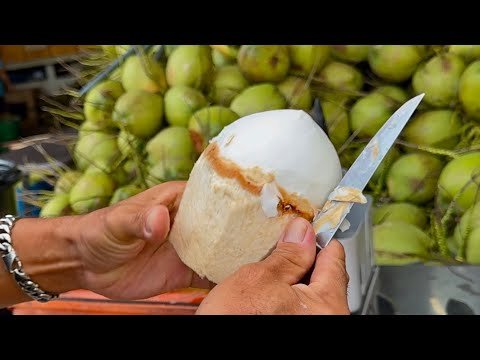
Coconuts in Thailand are more than just food. They are an integral part of the country’s economy, with millions of farmers relying on coconut cultivation for their livelihoods. The fruit is used in countless ways: fresh coconut water for hydration, creamy coconut milk in curries, shredded coconut in desserts, and oil for cooking and cosmetic products. Street food culture, in particular, thrives on coconut, with vendors serving coconut ice cream, coconut pancakes, and refreshing drinks straight from the shell.
Thailand ranks among the top coconut-producing countries in the world, with southern provinces such as Surat Thani, Nakhon Si Thammarat, and Krabi leading production. The sheer volume of coconuts harvested annually is staggering, reflecting the importance of careful planning, efficient harvesting, and skilled labor.
Preparing for the Coconut Harvest
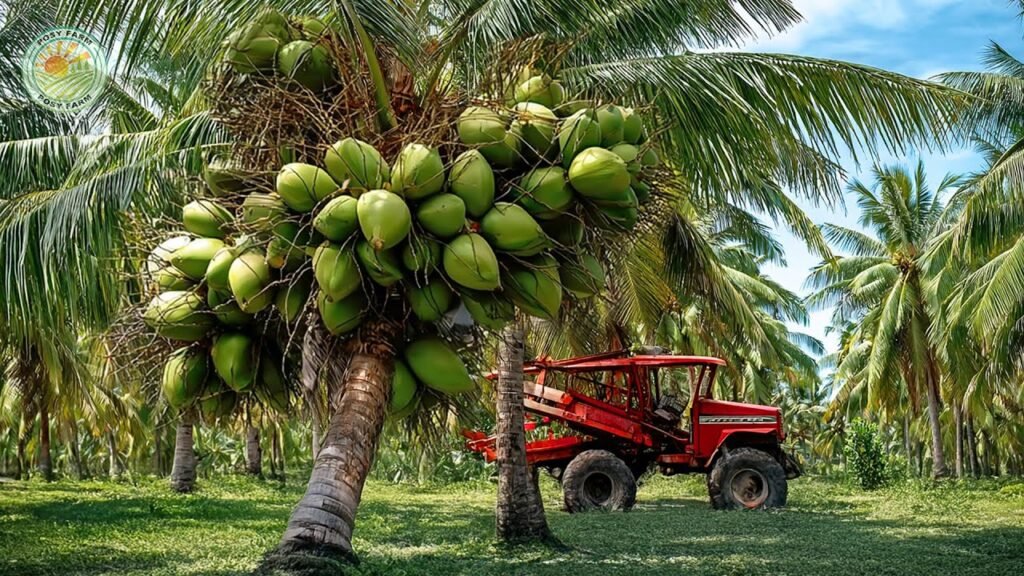
Harvesting coconuts is a year-round task, as trees can produce fruit throughout the year, with peak production in certain months depending on the region. Farmers monitor the trees closely, keeping track of the stages of nut development.
Coconut palms take several years to mature. Typically, a coconut tree begins bearing fruit between 6 and 10 years of age, and it can continue producing for up to 80 years under ideal conditions. Before harvesting, farmers check the coconuts for maturity. Mature coconuts are brown, while younger “green” coconuts, prized for their water, are harvested earlier.
Techniques for Harvesting Coconuts
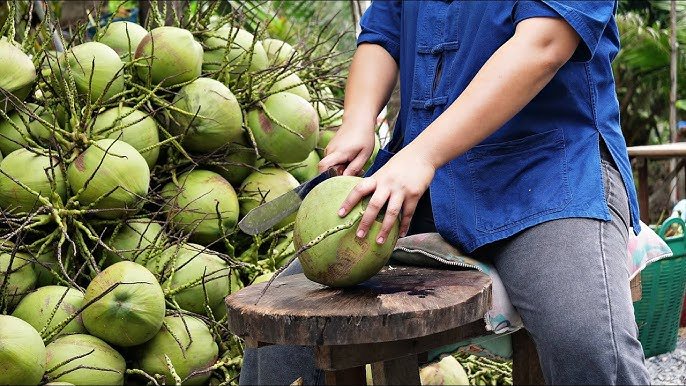
The methods for harvesting coconuts are both traditional and modern, balancing efficiency with care to prevent damage to the trees and fruits.
- Climbing the Trees: Traditionally, skilled workers, often called “coconut climbers,” scale the tall palms using ropes or by wrapping their legs around the trunk. Using a curved knife or machete, they cut the coconuts and allow them to drop to the ground, where they are collected. This method requires agility, strength, and experience, as coconut palms can grow over 30 meters tall.
- Using Poles and Hooks: In some areas, farmers use long bamboo poles with attached knives or hooks to cut coconuts from the ground. This method reduces the risk of falls but requires precision to ensure the nuts are harvested cleanly.
- Mechanical Harvesting: Modern farms, particularly large plantations, may use hydraulic lifts, cranes, or mechanical shakers to harvest coconuts. These techniques increase efficiency and reduce labor intensity, especially for high-volume production. However, due to the delicate nature of the fruit and the traditional value of climbing, manual harvesting remains common in many regions.
Collecting and Transporting Coconuts
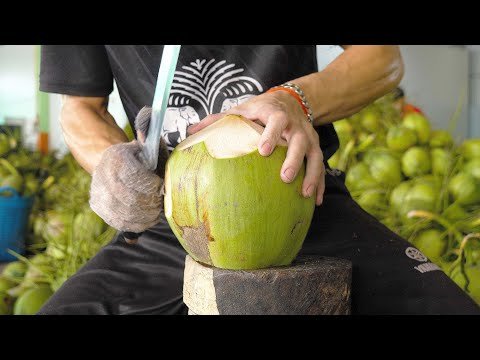
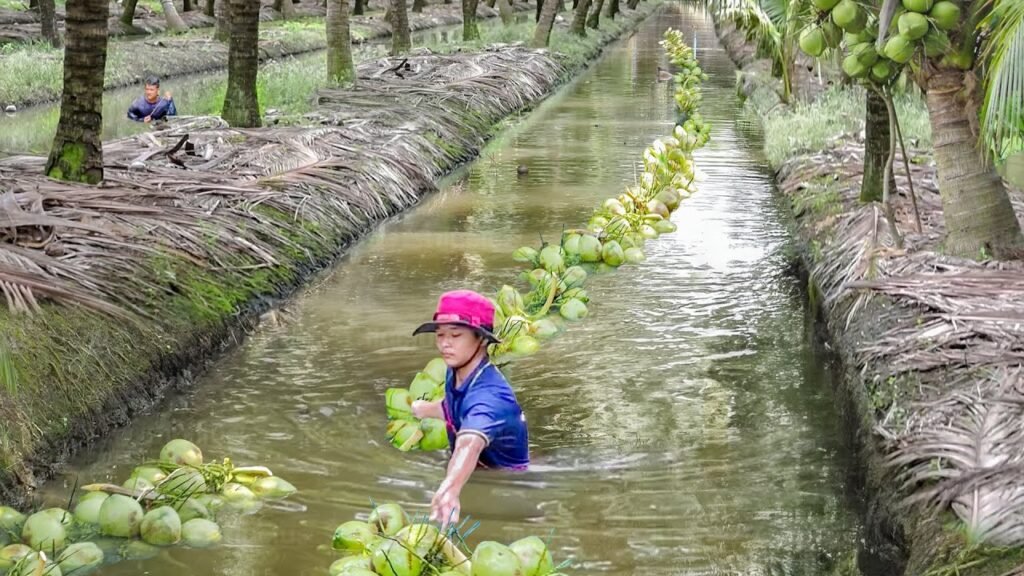
Once coconuts are harvested, they are collected and transported to local markets, processing facilities, or storage areas. On small farms, workers gather coconuts into baskets or sacks. In larger plantations, tractors or carts are used to transport hundreds of coconuts at a time.
Transport is a critical step. For coconuts intended for immediate consumption as fresh water coconuts, timing is key. These green coconuts have a short shelf life and must reach markets quickly. For coconuts destined for milk, oil, or copra production, the fruits are processed soon after harvesting to maintain quality.
Processing Coconuts for Different Uses
Thailand’s coconut industry is diverse, and each type of coconut product has a specific processing method:
- Fresh Coconut Water: Harvested green coconuts are cracked open at markets or processing centers. The water is either sold fresh or packaged for export.
- Coconut Milk and Cream: Mature coconuts are husked, grated, and pressed to extract milk and cream. This is a staple ingredient in Thai curries, soups, and desserts.
- Coconut Oil: Copra (dried coconut kernel) is pressed to produce oil. Thailand produces both virgin and refined coconut oil, used in cooking, cosmetics, and industrial applications.
- Desiccated Coconut: Shredded coconut is dried and packaged for baking, confectionery, and food production.
Each processing method requires careful handling to maintain flavor, aroma, and nutritional quality.
Challenges Faced by Coconut Farmers
Coconut farming is not without challenges. Farmers must contend with pests such as rhinoceros beetles and coconut mites, which can damage trees and reduce yield. Diseases like bud rot and leaf blight can also affect coconut palms.
Weather is another significant factor. Heavy rains or storms can knock down coconuts prematurely, while prolonged drought can reduce water content and affect fruit quality. Farmers must employ strategies like irrigation, mulching, and integrated pest management to ensure healthy crops.
Labor is critical, too. Skilled coconut climbers are essential, but the job is physically demanding, and labor shortages can impact harvest efficiency. Some farms address this with mechanization, training programs, or community labor sharing.
Coconut and Thailand’s Street Food Culture
Coconuts are integral to Thailand’s vibrant street food scene. Vendors serve freshly opened coconuts, often adding sweet syrup or ice for a refreshing treat. Coconut milk is used in popular dishes such as Thai green curry, Tom Kha soup, and sticky rice desserts. Desserts like coconut pancakes and coconut ice cream showcase the versatility of this tropical fruit.
By harvesting millions of coconuts annually, Thai farmers ensure that street food vendors and home cooks have a steady supply of this essential ingredient. The relationship between coconut production and Thailand’s culinary identity is undeniable.
Innovations in Coconut Farming
While tradition plays a huge role in coconut cultivation, Thai farmers are increasingly adopting modern technologies:
- High-Yield Varieties: New varieties of coconut palms are bred to produce more fruit per tree, resist disease, and tolerate environmental stress.
- Mechanized Harvesting: Large-scale farms use lifts and mechanical harvesters to improve efficiency and reduce labor costs.
- Irrigation and Fertilization Management: Smart irrigation systems and precision fertilizers help optimize growth and fruit quality.
- Sustainable Practices: Farmers are implementing organic farming techniques, using coconut husks and shells for mulch, and recycling waste into biofuel or compost.
These innovations allow Thailand to maintain its position as a top coconut-producing nation while improving sustainability and productivity.
Conclusion
The journey of a coconut from a tall palm tree in southern Thailand to a refreshing drink on a Bangkok street or an ingredient in a creamy curry is remarkable. Harvesting millions of tons of coconuts each year is a labor-intensive, skill-driven process that blends traditional methods with modern innovations. Thai farmers dedicate their lives to cultivating, harvesting, and processing these versatile fruits, ensuring that both local communities and international markets have access to fresh, high-quality coconuts.
Next time you sip coconut water from a Thai street vendor or enjoy coconut-based dishes at home, remember the journey behind every nut. It’s a story of hard work, expertise, and a deep connection between farmers, their land, and the food culture that makes Thailand so unique. Through their efforts, Thai farmers continue to sustain one of the world’s most beloved tropical fruits while enriching the vibrant culinary traditions of their country.