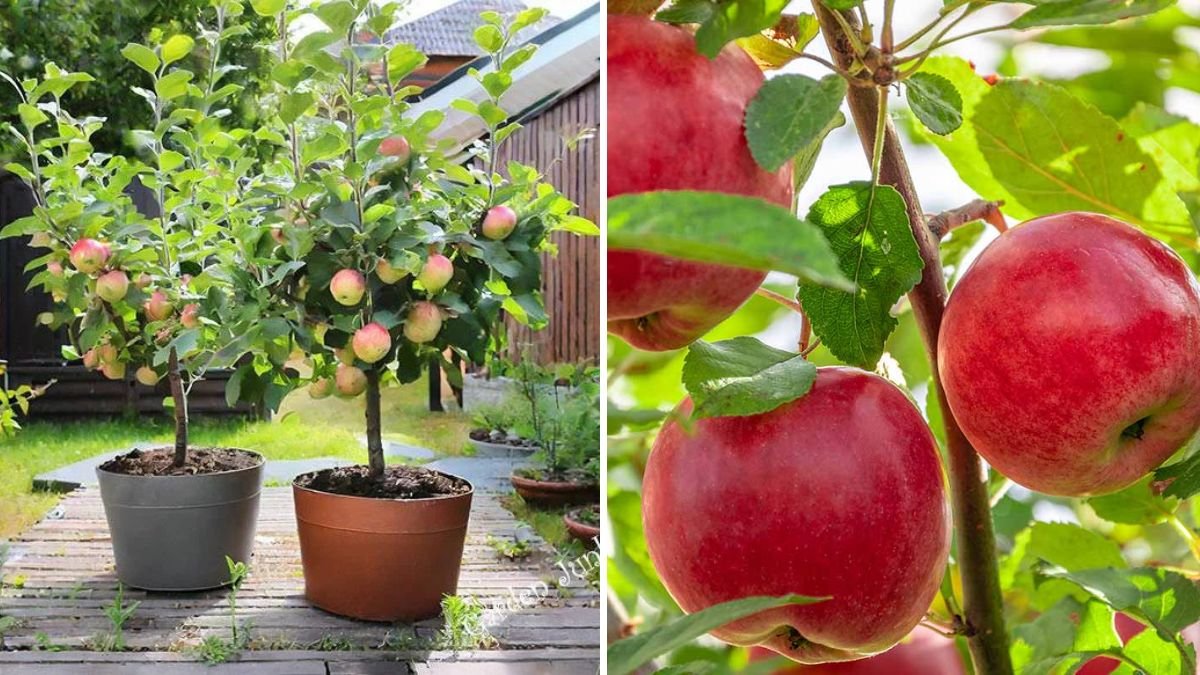
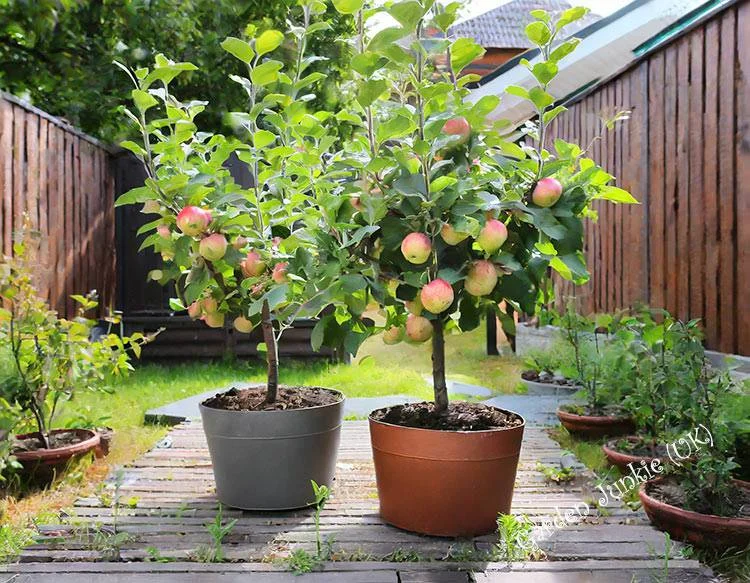
Apple trees are iconic symbols of gardens and orchards, but not everyone has the luxury of a sprawling backyard. Fortunately, growing apples in containers offers a practical and rewarding solution for urban gardeners, balcony enthusiasts, or anyone looking to create a mini orchard at home. Container apple gardening allows you to cultivate fresh, juicy apples even in limited spaces, while also adding greenery and beauty to your surroundings. This guide provides detailed information on selecting varieties, preparing containers, planting, care, and harvesting apples in pots.
Choosing the Right Apple Variety for Containers
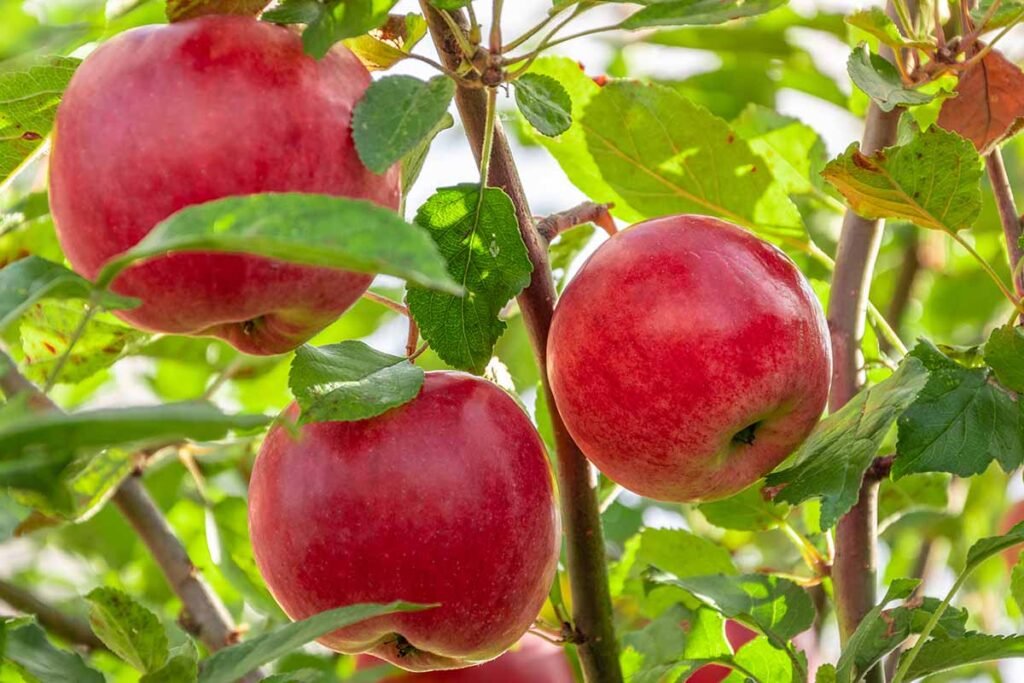
The first step in growing apples in containers is selecting the appropriate variety. Standard apple trees can grow up to 30 feet tall, which is impractical for container gardening. Instead, dwarf or semi-dwarf varieties are ideal because they remain compact, easier to manage, and fruit sooner than standard trees.
Popular dwarf apple varieties for containers include:
- ‘Honeycrisp’ – Known for its sweet-tart flavor and crisp texture.
- ‘Gala’ – Sweet, aromatic apples that are great for fresh eating.
- ‘Fuji’ – Produces large, sweet apples, though it may require more sunlight.
- ‘Liberty’ – Disease-resistant and well-suited for containers.
- ‘Dwarf Jonathan’ or ‘Dwarf Red Delicious’ – Classic choices for compact spaces.
When selecting a variety, consider your climate, taste preference, and disease resistance. Container-grown apple trees typically require full sun for at least 6–8 hours per day, so choose varieties that thrive in your local conditions.
Selecting the Right Container
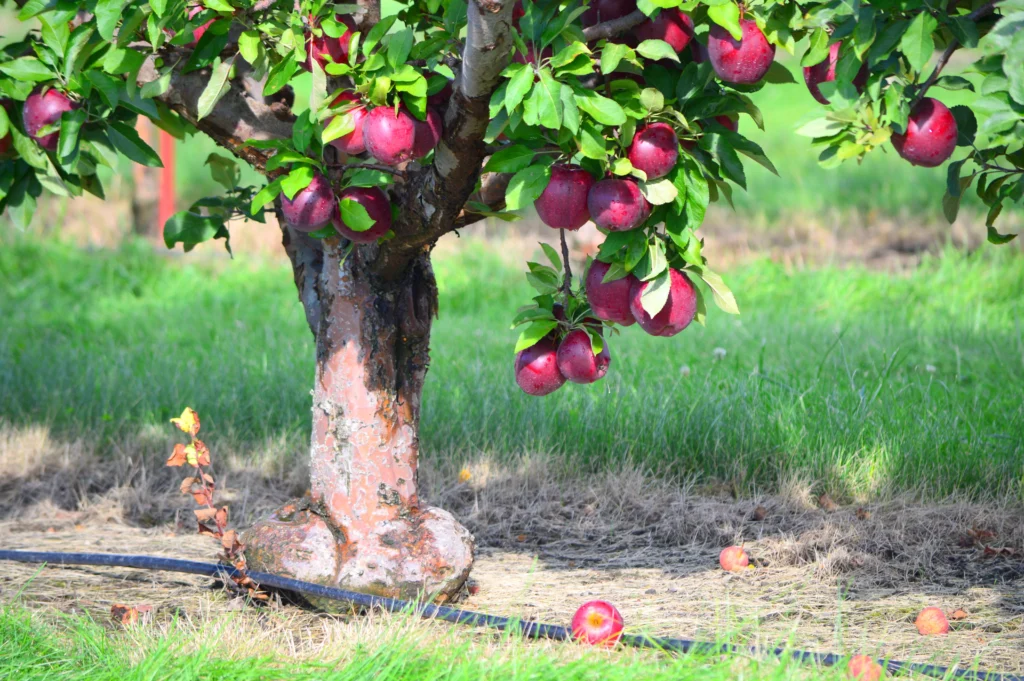
Apple trees need space for roots to grow, proper drainage, and enough soil to retain moisture. The container you choose is critical for success.
Container requirements:
- Size: A minimum of 18–24 inches in diameter and depth for dwarf varieties; semi-dwarf trees may need 24–30 inches.
- Material: Plastic, wood, fiberglass, or ceramic containers work well. Plastic is lightweight and easy to move, while wood or ceramic offers better insulation.
- Drainage: Ensure the container has multiple drainage holes to prevent waterlogging, which can lead to root rot.
Adding a layer of gravel or small stones at the bottom can improve drainage and reduce the risk of standing water.
Choosing the Right Soil
Container-grown apple trees need a well-draining, nutrient-rich potting mix. Unlike garden soil, which can compact and limit root growth, potting soil ensures adequate aeration, drainage, and nutrient availability.
Ideal soil mix for apple containers:
- 2 parts high-quality potting soil
- 1 part compost or well-rotted manure
- 1 part perlite or coarse sand for drainage
Maintaining slightly acidic soil with a pH between 6.0 and 6.5 promotes healthy growth. Test your soil and amend it as necessary to optimize conditions.
Planting Apple Trees in Containers
Planting apple trees in containers requires care to prevent root stress and ensure establishment.
Steps for planting:
- Fill the container with soil mix, leaving enough space for the root ball.
- Remove the tree from its nursery pot and gently loosen the roots.
- Position the tree in the container, ensuring the graft union (a small bulge near the base) is above the soil line.
- Fill around the roots with soil mix, pressing lightly to eliminate air pockets.
- Water thoroughly to settle the soil.
Consider staking the tree for support, especially for taller varieties or in windy locations.
Watering and Fertilization
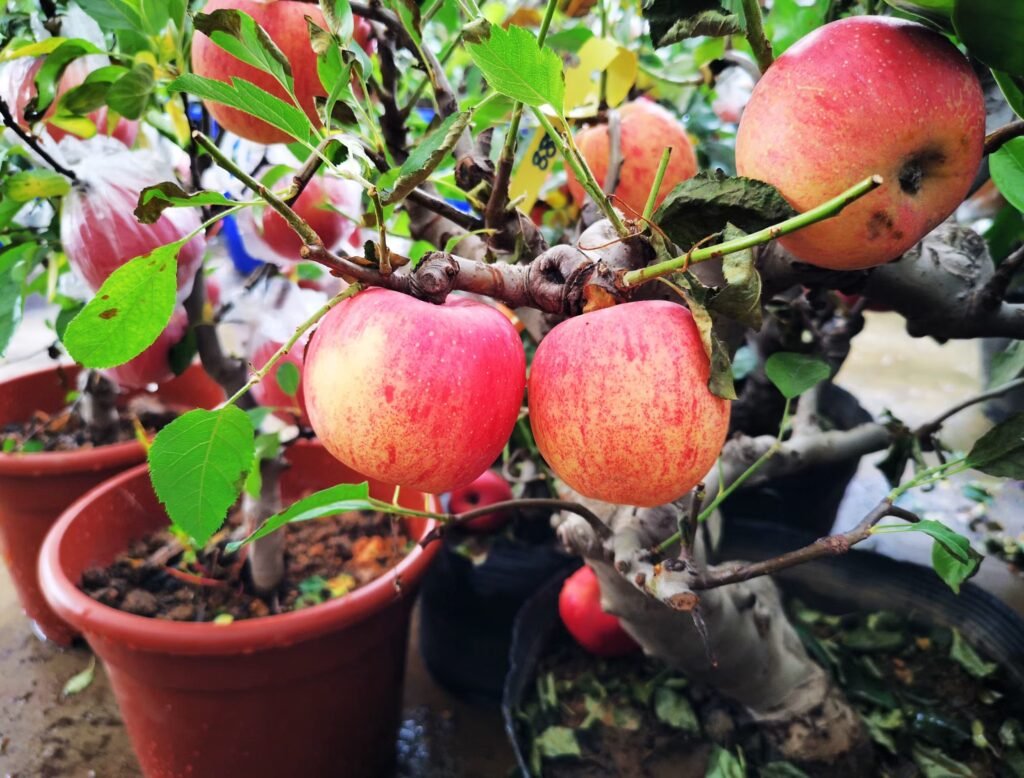
Container-grown apple trees require consistent moisture because their limited soil volume dries out faster than ground soil.
Watering tips:
- Water deeply when the top inch of soil feels dry.
- Avoid frequent shallow watering, which encourages weak roots.
- During hot summer months, container trees may require daily watering.
Fertilization:
- Apply a balanced, slow-release fertilizer designed for fruit trees in spring.
- Supplement with liquid fertilizer every 4–6 weeks during the growing season.
- Avoid over-fertilizing, as this can lead to excessive leafy growth at the expense of fruit.
Pruning and Training
Pruning is essential for shaping your mini orchard, promoting airflow, and encouraging fruit production. Container apple trees benefit from both formative and maintenance pruning.
Pruning tips:
- Formative pruning: Remove crossing branches and establish a central leader in the first 1–2 years.
- Maintenance pruning: Trim back overly vigorous shoots and remove dead or diseased wood annually.
- Keep the tree height manageable by pruning the top, which also improves sunlight exposure.
Training the branches with supports or espalier techniques can maximize space and fruit yield, especially on patios or balconies.
Pollination
Most apple trees are not self-pollinating and require a compatible pollinator for fruit production. If you are planting a single tree, select a self-pollinating variety such as ‘Granny Smith’ or ‘Golden Delicious.’ For cross-pollination, ensure another apple variety is nearby, ideally within 30 feet.
Bees and other pollinators are critical for fruit set, so try to attract pollinators with flowering plants nearby or hand-pollinate using a small brush if natural pollinators are scarce.
Pest and Disease Management
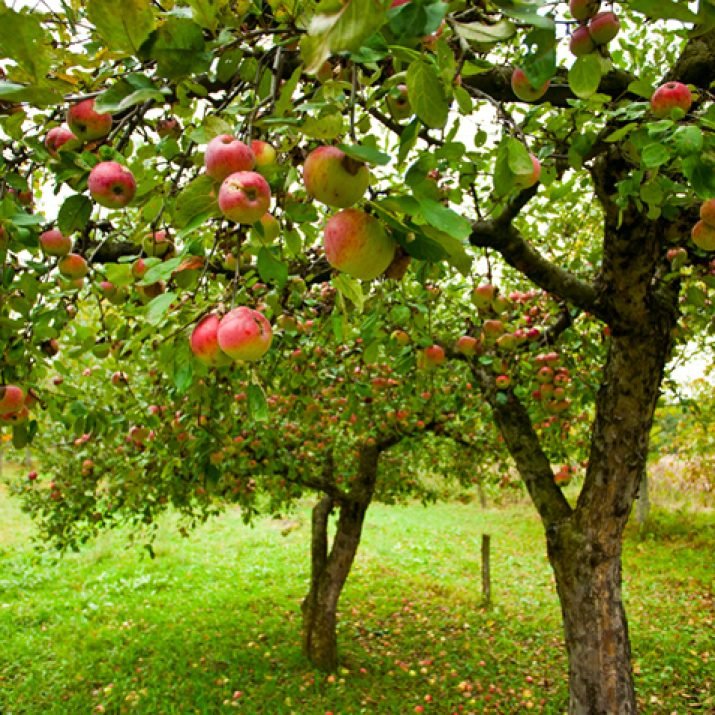
Container apple trees are less susceptible to some soil-borne diseases but still require vigilance. Common issues include aphids, apple scab, powdery mildew, and fire blight.
Tips for prevention:
- Inspect leaves regularly for signs of pests or disease.
- Remove fallen leaves and pruned branches to reduce disease risk.
- Apply organic insecticidal soap or neem oil for pest control.
- Use disease-resistant varieties whenever possible.
Maintaining proper spacing, pruning for airflow, and ensuring clean containers all reduce the likelihood of problems.
Winter Care and Protection
If you live in a region with freezing winters, container apple trees need extra protection because the roots are more exposed.
Winter tips:
- Move containers to a sheltered location such as a garage, shed, or against a south-facing wall.
- Wrap the container with insulating materials like burlap or bubble wrap.
- Mulch the soil surface to protect roots from freezing temperatures.
Dwarf varieties are generally hardier than larger trees, but winter care is still essential for survival.
Harvesting Apples
Apples are ready to harvest when they reach their mature color, and the fruit comes off the tree with a gentle twist. Avoid leaving ripe apples on the tree too long, as overripe fruit may fall or attract pests.
Harvesting tips:
- Pick apples early in the day when temperatures are cooler.
- Store harvested apples in a cool, dry place or refrigerate for longer shelf life.
- Regular harvesting encourages continued fruiting.
Container apple trees typically start producing fruit within 2–3 years of planting, offering a satisfying return on your care and patience.
Creating a Mini Orchard at Home
One of the joys of container apple gardening is the ability to create a mini orchard, even in small spaces. By arranging several dwarf or semi-dwarf trees in stylish containers, you can enjoy a variety of apple flavors and colors. Mixing flowering companion plants enhances pollination and adds visual appeal.
Consider using raised platforms, tiered stands, or vertical gardening techniques to maximize space while keeping your mini orchard organized and attractive.
Conclusion
Growing apples in containers is an accessible, enjoyable way to enjoy fresh fruit and bring a touch of nature into urban spaces or small gardens. By choosing the right variety, using proper containers, providing nutritious soil, and giving consistent care, anyone can create a thriving mini apple orchard at home. From selecting the perfect dwarf variety to harvesting your first crisp apple, container apple gardening is both rewarding and educational, offering a satisfying connection to the rhythm of nature right from your balcony or patio.
Whether you are a beginner gardener or an experienced horticulturist, container-grown apple trees provide an opportunity to experiment, learn, and savor the fruits of your labor—literally. With attention to detail and a little patience, your mini orchard can flourish, bringing beauty, fragrance, and fresh apples to your home for years to come.