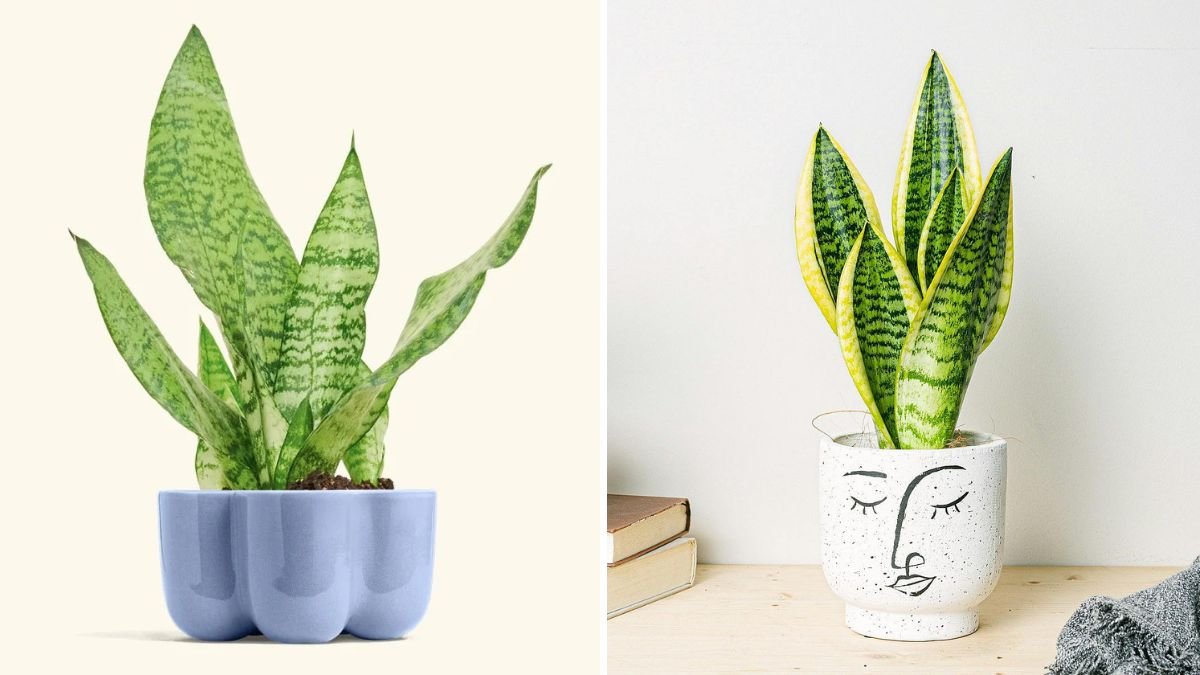
Snake plants, also known as Sansevieria or Dracaena trifasciata, are among the most resilient and attractive houseplants available. Their striking upright leaves, low-maintenance nature, and air-purifying qualities make them perfect for creating a calming, stress-free green corner in any home or office. Whether you are a seasoned plant parent or a beginner, snake plants provide a combination of beauty and practicality that few other plants can match.
This guide explores everything you need to know about growing snake plants indoors, including care tips, light requirements, watering routines, propagation methods, and how to design a peaceful green space with them.
1. Why Snake Plants Are Perfect for Indoor Spaces
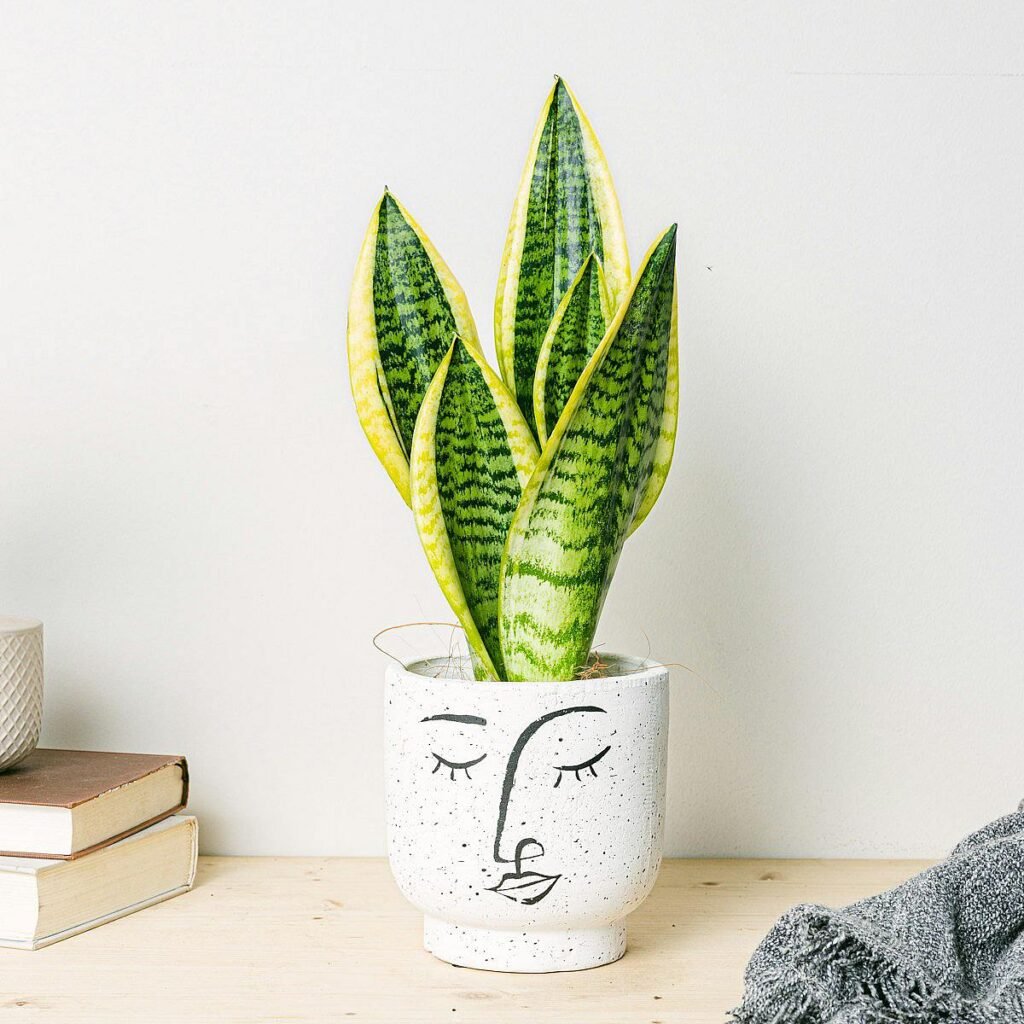
Snake plants are ideal for indoor environments due to several unique qualities:
- Low maintenance: They tolerate neglect and infrequent watering.
- Air purification: They filter toxins like formaldehyde, benzene, and xylene from indoor air.
- Adaptable to light conditions: They thrive in bright, indirect light but can survive low-light environments.
- Stress reduction: Indoor greenery, like snake plants, has been linked to improved mood, reduced stress, and enhanced focus.
Pro Tip: A snake plant in a bedroom can even improve sleep quality by producing oxygen at night.
2. Choosing the Right Snake Plant Variety
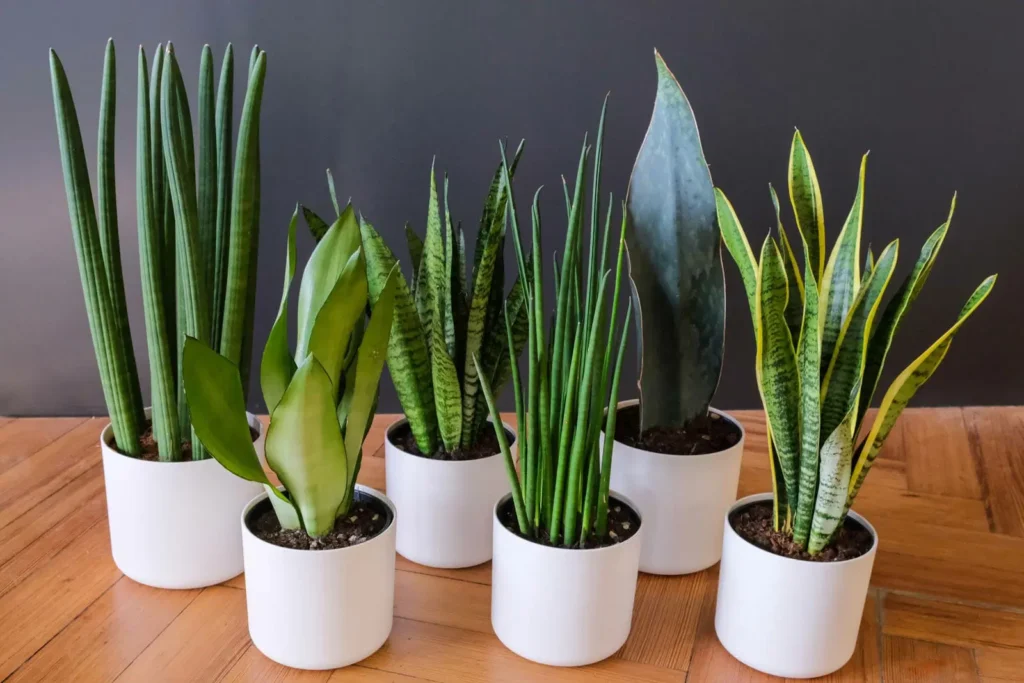
There are several popular indoor varieties to consider:
- Sansevieria trifasciata ‘Laurentii’: Classic green leaves with yellow edges.
- Sansevieria cylindrica: Rounded, cylindrical leaves for a modern look.
- Sansevieria moonshine: Silvery-green leaves, ideal for contemporary interiors.
- Sansevieria hahnii: Compact, short leaves, perfect for desks or shelves.
Tip: Choose a variety that matches your space and aesthetic preference while considering growth size.
3. Selecting the Right Pot and Soil
Pot Selection
- Use pots with drainage holes to prevent waterlogging and root rot.
- Terracotta pots are ideal as they absorb excess moisture and prevent overwatering.
- Choose a pot slightly larger than the root ball to allow growth but avoid oversized containers.
Soil Selection
- Snake plants need well-draining soil.
- Use a cactus or succulent mix, or create your own by mixing standard potting soil with perlite or sand.
Pro Tip: Proper drainage is the single most important factor in preventing the most common snake plant problems.
4. Light Requirements for Healthy Growth
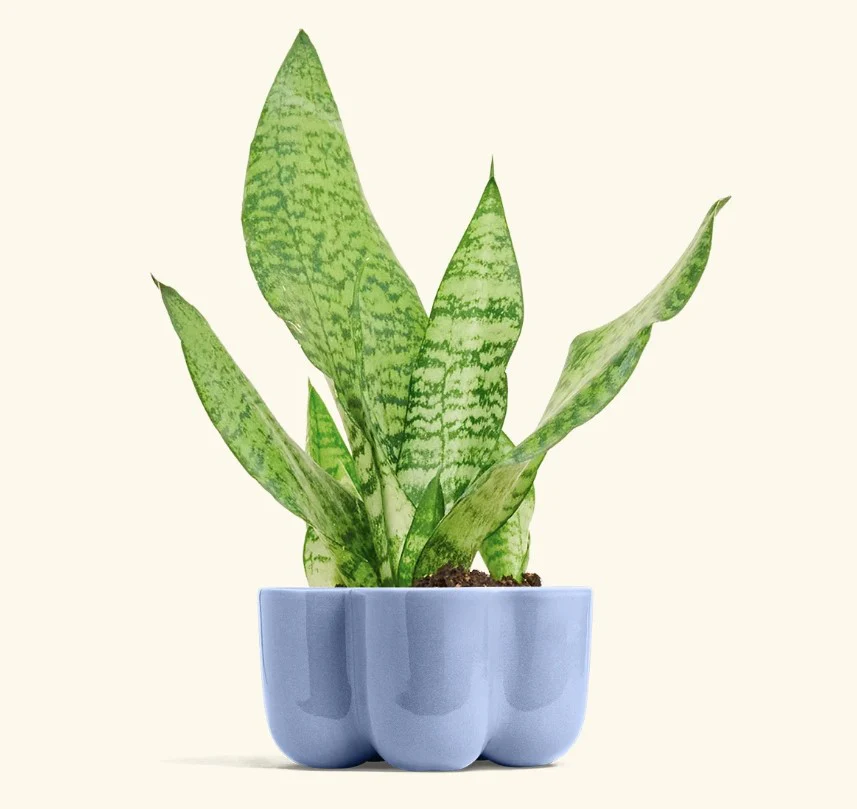
Snake plants are highly adaptable but perform best with:
- Bright, indirect light: Encourages strong, upright growth.
- Low-light tolerance: Can survive in offices, bedrooms, or corners with minimal natural light.
- Avoid direct sunlight: Intense sun can scorch the leaves, causing brown tips.
Pro Tip: Rotate the plant occasionally to ensure even growth on all sides.
5. Watering Guidelines
Watering is the key to keeping your snake plant happy and stress-free:
- Frequency: Water every 2–6 weeks depending on indoor temperature, season, and humidity.
- Check the soil: Allow the top 2–3 inches of soil to dry out completely between waterings.
- Winter care: Water less frequently as growth slows down.
- Avoid overwatering: The most common cause of snake plant death is root rot due to excess moisture.
Tip: Always water at the base and avoid getting water on the leaves, which can lead to rot or fungal issues.
6. Temperature and Humidity
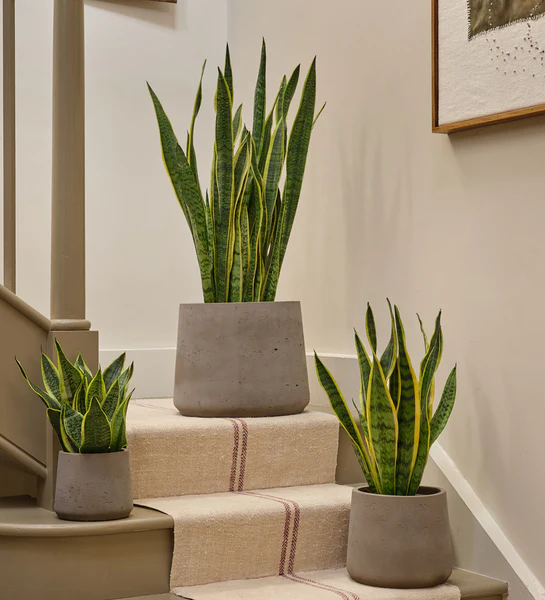
- Ideal temperature: 60–85°F (16–29°C).
- Avoid frost: Snake plants are not frost-tolerant; keep away from drafty windows in winter.
- Humidity: Normal indoor humidity levels are fine.
Pro Tip: Snake plants thrive in environments with stable temperatures, making them perfect for homes, offices, and apartments.
7. Fertilizing Your Snake Plant
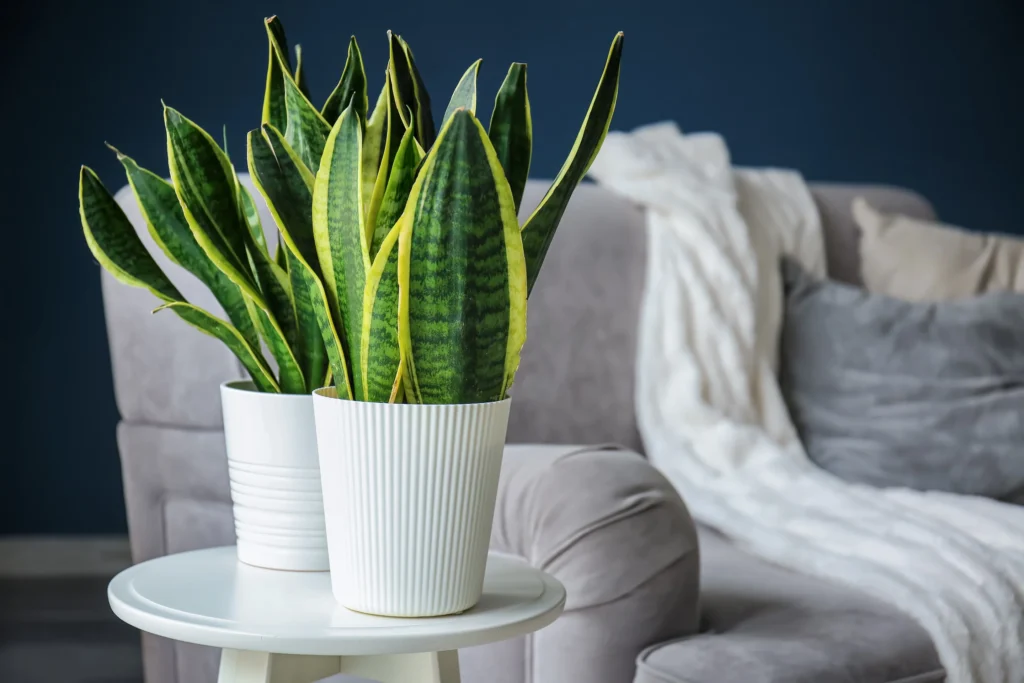
Snake plants are light feeders:
- Use a balanced, water-soluble fertilizer once during the growing season (spring and summer).
- Avoid fertilizing in fall and winter, when the plant enters dormancy.
- Over-fertilization can lead to weak, soft leaves or salt build-up in the soil.
Pro Tip: Fertilize sparingly; these plants are naturally resilient and do not require frequent feeding.
8. Repotting Your Snake Plant
Snake plants grow slowly and don’t require frequent repotting:
- Repot every 2–3 years or when roots fill the pot.
- Signs you need to repot: roots growing through drainage holes, stunted growth, or soil that dries too quickly.
- Use fresh, well-draining soil and a pot slightly larger than the current one.
Pro Tip: Snake plants can also thrive in slightly cramped conditions, so don’t rush repotting unnecessarily.
9. Propagation for Stress-Free Multiplication
Snake plants are easy to propagate, allowing you to expand your green corner or share plants with friends:
1. Leaf Cuttings
- Cut a healthy leaf into 2–3 inch sections.
- Allow cuttings to dry for 1–2 days.
- Place cuttings in soil with the bottom end down.
2. Division
- Remove the plant from its pot.
- Separate clusters of leaves with roots attached.
- Plant divisions in fresh soil.
Pro Tip: Propagation is best during the growing season for faster root development.
10. Common Problems and How to Avoid Them
| Problem | Cause | Solution |
|---|---|---|
| Yellowing leaves | Overwatering | Reduce watering, improve drainage |
| Soft or mushy leaves | Root rot | Remove affected roots, repot in dry soil |
| Brown leaf tips | Low humidity or inconsistent watering | Maintain consistent watering; trim tips |
| Pests (mealybugs, spider mites) | Infestation | Wipe leaves with alcohol or neem oil |
Pro Tip: Snake plants are resilient but respond best to consistent care, proper watering, and adequate light.
11. Creating a Stress-Free Green Corner
- Placement: Bedrooms, living rooms, or office corners benefit from snake plants’ air-purifying properties.
- Styling: Combine snake plants with other low-maintenance plants like pothos, ZZ plants, or succulents.
- Decor: Use decorative pots, minimalist stands, or groupings to create a visually pleasing corner.
- Mindfulness: A green corner can reduce stress, increase productivity, and enhance indoor air quality.
Pro Tip: Keep the area uncluttered and enjoy the calming presence of your snake plants.
12. Final Thoughts
Snake plants are ideal indoor companions for anyone seeking a stress-free, low-maintenance, and beautiful green corner. Their durability, air-purifying qualities, and aesthetic appeal make them perfect for homes, offices, and apartments.
Key takeaways:
- Choose the right variety and container to match your space and style.
- Provide bright, indirect light and avoid overwatering.
- Fertilize lightly and repot only when necessary.
- Propagate easily to multiply your indoor garden.
- Combine with other plants and decor elements for a calming green space.
With proper care, your snake plant will thrive, bringing beauty, fresh air, and a sense of tranquility to your indoor environment for years to come.