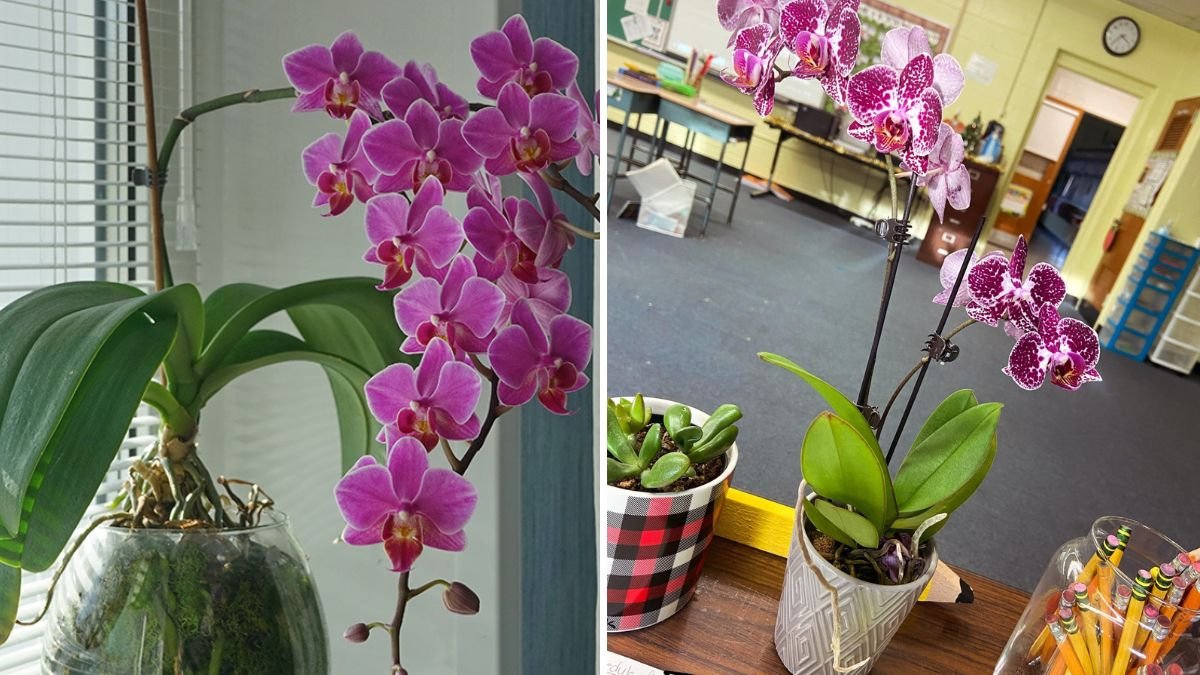
Orchids are among the most elegant and captivating indoor plants, admired for their exotic beauty and vibrant blooms. However, one common frustration for orchid enthusiasts is that the flowers often fade quickly, leaving the plant looking dull despite its lush foliage. Keeping orchids blooming longer requires understanding their natural growth habits, providing proper care, and creating optimal indoor conditions.
In this article, we’ll explore practical strategies and expert tips to extend the flowering period of your indoor orchids, helping you enjoy their beauty for weeks or even months.
Understanding Orchid Bloom Cycles
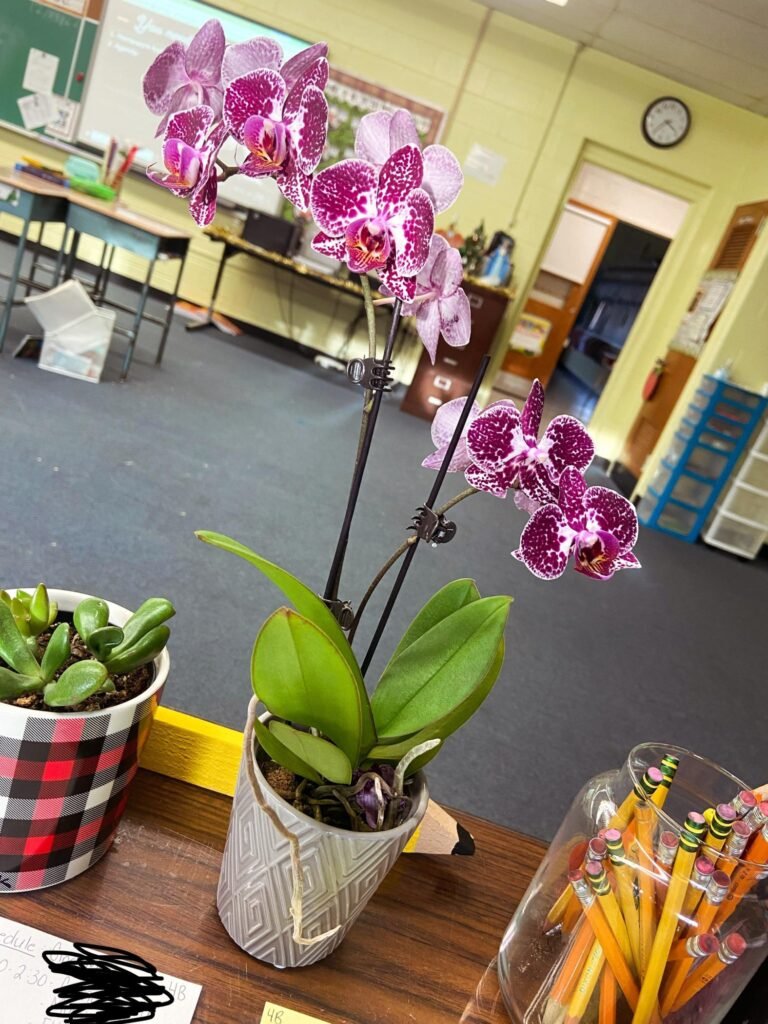
Before diving into care strategies, it’s important to understand the bloom cycle of orchids. Most indoor orchids, such as Phalaenopsis (moth orchids), Dendrobium, and Cattleya, follow a pattern:
- Vegetative Growth: The plant produces leaves and roots, storing energy for flowering.
- Flower Spike Initiation: Triggered by temperature changes, light levels, and sometimes stress.
- Flowering: Flowers bloom, typically lasting several weeks.
- Dormancy: After blooming, the plant rests and redirects energy to roots and foliage.
Knowing this cycle helps you provide care tailored to the orchid’s needs at each stage, which is key to prolonging bloom duration.
1. Provide the Right Light
Light is crucial for photosynthesis and flower development. Too little light can shorten bloom time, while too much can scorch leaves.
Tips for optimal light:
- Phalaenopsis orchids: Bright, indirect light; east or south-facing windows work best.
- Cattleya and Dendrobium: Bright, filtered sunlight; avoid direct afternoon sun.
- Indicators: Dark green leaves may indicate insufficient light, while yellowish or scorched leaves suggest excessive sunlight.
Tip: Consider supplementing with grow lights if natural light is insufficient, especially during winter months.
2. Maintain Proper Temperature
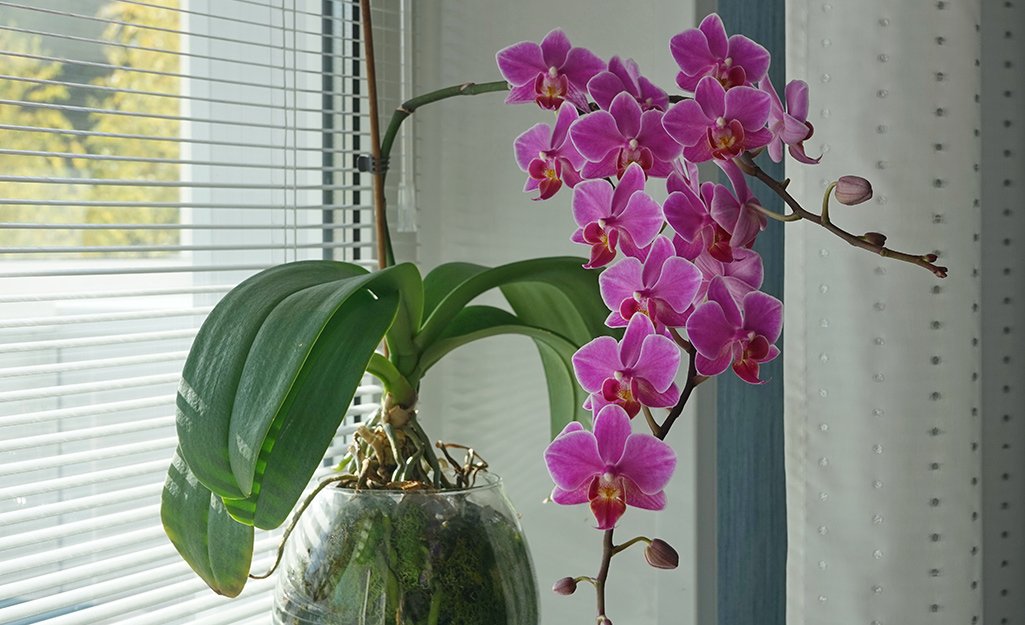
Orchids are sensitive to temperature fluctuations, which can influence bloom longevity.
General guidelines:
- Day temperature: 70–80°F (21–27°C)
- Night temperature: 60–65°F (15–18°C)
Temperature cues for flowering:
- Some orchids, like Phalaenopsis, need slightly cooler nights to stimulate flower spike initiation.
- Avoid placing orchids near heaters, radiators, or drafty windows, as extreme temperature changes can cause buds to drop prematurely.
3. Humidity and Air Circulation
Orchids thrive in moderate to high humidity (50–70%), which helps flowers stay fresh longer.
Tips to maintain humidity:
- Use a humidity tray filled with water and pebbles under the orchid pot.
- Mist orchids lightly with water, preferably in the morning to avoid fungal issues.
- Group plants together to create a microclimate.
Air circulation:
- Gentle airflow prevents fungal infections and allows flowers to stay healthy.
- Avoid placing orchids in stagnant or excessively windy areas.
4. Proper Watering Techniques
Watering is critical for orchid health and bloom longevity. Overwatering can rot roots, while underwatering stresses the plant, causing blooms to drop early.
Tips for watering:
- Water orchids when the potting medium is nearly dry, not on a strict schedule.
- Use room-temperature water and avoid waterlogging.
- Ensure pots have drainage holes to prevent standing water.
Tip: Avoid wetting flowers directly, as this can shorten their lifespan and promote disease.
5. Fertilize Carefully
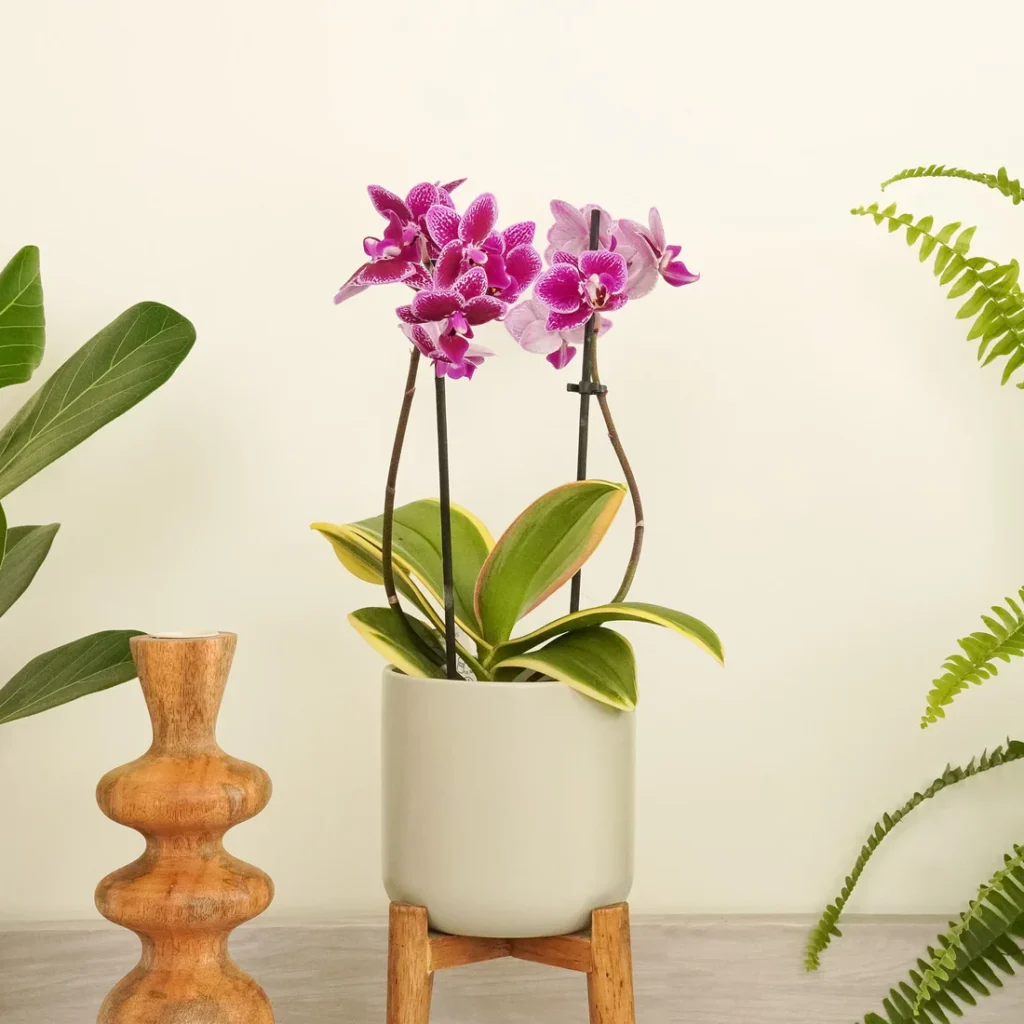
Feeding orchids provides essential nutrients that support flower health and duration.
Fertilizing tips:
- Use a balanced orchid fertilizer (20-20-20) at half strength every 2–4 weeks during the growing season.
- Switch to a bloom booster fertilizer higher in phosphorus (10-30-20) to support flower longevity.
- Avoid over-fertilizing, which can damage roots and reduce flower duration.
Tip: Flush the potting medium occasionally to prevent salt buildup from fertilizers.
6. Deadhead and Support Blooms
Proper care of flowers themselves can extend their display:
Deadheading:
- Remove faded or yellowing flowers carefully by cutting the stem just above a healthy node.
- This prevents the plant from diverting energy away from remaining blooms.
Supporting spikes:
- Use stakes or clips to support long flower spikes and prevent breakage.
- Avoid touching petals frequently, as oils from hands can shorten bloom life.
7. Repotting and Potting Medium
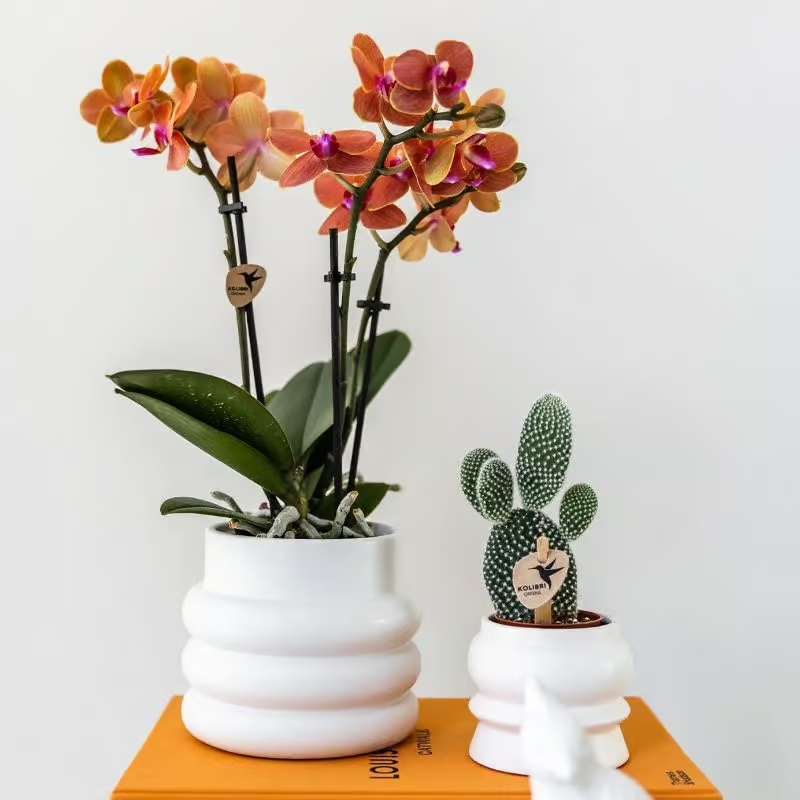
Orchids thrive in well-draining, airy media that allow roots to breathe. Dense or compacted media can stress the plant and reduce bloom longevity.
Tips:
- Use orchid-specific media such as bark, sphagnum moss, or coconut husk.
- Repot every 1–2 years, or when medium breaks down, exposing roots to potential rot.
- Ensure the pot allows good drainage and airflow.
Tip: Repot orchids after flowering, not during bloom, to avoid stress and premature bud drop.
8. Mimic Natural Light and Temperature Changes
Many orchids respond to subtle seasonal cues, such as cooler nights or increased light, which signal the plant to extend bloom duration or initiate new blooms.
Practical methods:
- Provide slightly cooler nighttime temperatures in winter.
- Gradually increase light exposure as days lengthen in spring.
- Avoid sudden relocation or changes in environment during bloom, as stress can cause flowers to fade faster.
9. Prevent Pests and Diseases
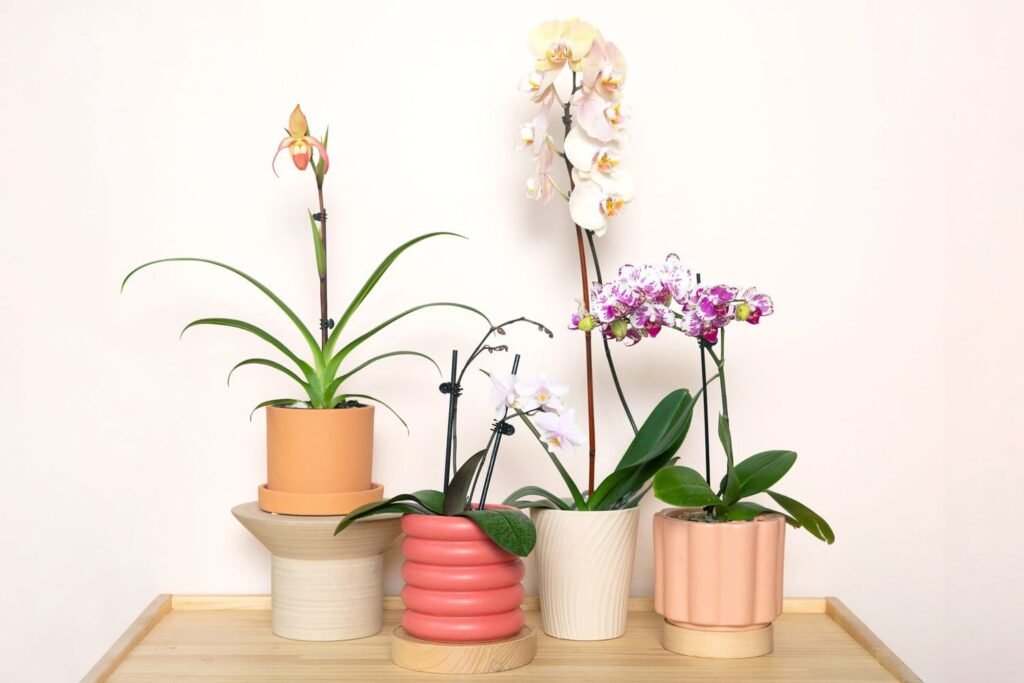
Pests like spider mites, aphids, and mealybugs can damage flowers and shorten bloom duration. Fungal or bacterial infections also affect flower health.
Preventive measures:
- Inspect orchids regularly for signs of pests or disease.
- Remove damaged leaves or blooms promptly.
- Use natural insecticidal sprays like neem oil if necessary.
- Maintain proper air circulation and avoid excess moisture on flowers.
10. Choosing Long-Blooming Varieties
Some orchid species naturally produce longer-lasting flowers. Consider:
- Phalaenopsis (Moth Orchid): Blooms can last 8–12 weeks indoors.
- Cattleya: Known for large, colorful, and fragrant blooms lasting 4–6 weeks.
- Oncidium: Small flowers but often bloom in sprays lasting several weeks.
- Dendrobium: Blooms can persist up to 8 weeks with proper care.
Choosing the right variety sets a strong foundation for long-lasting indoor blooms.
Conclusion
Keeping orchids blooming longer indoors requires attention to light, temperature, humidity, watering, fertilization, and careful handling of flowers. By providing optimal conditions, supporting flower spikes, and preventing stress and disease, you can maximize the beauty and lifespan of orchid blooms.
With patience and consistent care, your indoor orchids can become a centerpiece of elegance and fragrance, delighting you and your guests for weeks at a time. Orchids may be delicate, but with the right strategies, they reward dedicated gardeners with extended, vibrant, and mesmerizing flowers that make indoor spaces truly enchanting.